


 Deutsch
 English
 Español
 Français
 Nederlands
 Português


 Share
Share




Ismael 'El Mayo' Zambada García, the 76-year-old co-founder of the infamously violent Sinaloa Cartel, was sentenced to life in prison without the possibility of parole on July 20, 2026, in a Brooklyn federal courtroom. The sentencing of El Mayo Zambada marks the end of one of the most significant prosecutions in the history of U.S. drug enforcement, bringing to a close a decades-long reign of one of the world's most wanted drug traffickers.
Who is El Mayo Zambada?
Ismael Zambada García, known universally as 'El Mayo,' co-founded the Sinaloa Cartel alongside Joaquín 'El Chapo' Guzmán in the late 1980s. For nearly four decades, he served as the cartel's principal strategist and leader, overseeing the trafficking of massive quantities of cocaine, heroin, methamphetamine, and fentanyl into the United States. Unlike his flamboyant partner El Chapo, El Mayo maintained a low profile, avoiding capture for decades through a combination of corruption, violence, and deep connections within the Mexican government. He was known for his ruthlessness, ordering countless murders, kidnappings, and torture to protect the cartel's operations. The Sinaloa Cartel's global drug network extended across five continents, making it one of the most powerful criminal enterprises in history.
Historic Sentencing and $15 Billion Forfeiture
U.S. District Judge Brian M. Cogan, who also presided over El Chapo's 2019 trial, sentenced Zambada to life in prison. The judge noted the 'unimaginable amount of drugs' trafficked and the documented murders tied to the defendant. In addition to the life sentence, Zambada was ordered to forfeit $15 billion in proceeds from the cartel's criminal enterprise, representing one of the largest forfeiture orders in U.S. history. The forfeiture of drug trafficking assets is part of a broader U.S. strategy to dismantle cartel finances.
Zambada pleaded guilty in August 2025 to charges of continuing criminal enterprise and RICO conspiracy, admitting to leading the cartel from January 1989 through January 2024. As part of his plea agreement, prosecutors agreed not to seek the death penalty. In court, Zambada addressed the judge through a Spanish interpreter, offering an apology: 'I am here to say I'm sorry to everyone who has suffered or been affected by my actions. To the next generation, I say: choose a different path.'
The Arrest That Shook the Cartel World
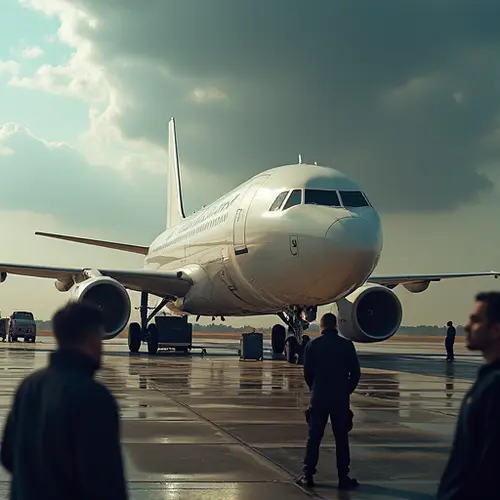
El Mayo was arrested in July 2024 in a dramatic operation that remains shrouded in controversy. He was lured to a ranch in the Mexican state of Sinaloa and flown to Texas, where he was handed over to the FBI. The operation was orchestrated by Joaquín Guzmán López, the son of El Chapo, who was also arrested. Guzmán López later admitted to kidnapping Zambada in hopes of receiving leniency from U.S. authorities. The controversial arrest of El Mayo has strained relations between the United States and Mexico.
Fallout and US-Mexico Tensions
The circumstances surrounding Zambada's capture have fueled a diplomatic crisis between Washington and Mexico City. Mexican President Claudia Sheinbaum has called for an investigation into the FBI's role in the operation, arguing that any direct U.S. law enforcement action on Mexican soil violates international treaties and Mexico's constitution. 'If a U.S. agency participated in this operation, they have violated international treaties and the Mexican constitution,' Sheinbaum said. The Mexican attorney general's office has launched a formal probe into whether U.S. agents lied about their involvement, further escalating tensions at a time when cross-border security cooperation is already fragile.
The controversy is compounded by broader geopolitical strains. The Trump administration has threatened unilateral military action against Mexican cartels, and reports of unauthorized CIA operations in Mexico have deepened mistrust. The Zambada case has become a flashpoint in the debate over sovereignty versus security cooperation.
Impact on the Sinaloa Cartel
With both El Mayo and El Chapo now serving life sentences in U.S. prisons, the Sinaloa Cartel's leadership has been decimated. However, the cartel has not been dismantled. Internal power struggles between the 'Mayiza' faction (loyal to El Mayo) and 'Los Chapitos' (led by El Chapo's sons) have erupted into a bloody narco-war, particularly in the state of Sinaloa. Since Zambada's arrest in 2024, at least 1,600 people have been killed in factional violence. His son, Ismael Zambada Sicairos ('El Mayito Flaco'), is believed to have inherited leadership of the Mayiza faction and remains a fugitive wanted by U.S. authorities.
DEA Administrator Anne Milgram called the sentencing a landmark victory: 'El Mayo helped transform the Sinaloa Cartel into one of the most violent and prolific criminal organizations in the world. Today's sentence sends a clear message: no matter how powerful or elusive, cartel leaders will face justice.'
FAQ: El Mayo Zambada's Life Sentence
What was El Mayo Zambada convicted of?
El Mayo pleaded guilty to leading a continuing criminal enterprise (CCE) and RICO conspiracy, which included drug trafficking, money laundering, murder, and firearms offenses. He admitted to directing the Sinaloa Cartel's operations from 1989 to 2024.
Why wasn't El Mayo given the death penalty?
As part of a plea agreement reached in August 2025, federal prosecutors agreed not to seek the death penalty in exchange for Zambada's guilty plea. The agreement also included the $15 billion forfeiture.
How was El Mayo finally captured?
Zambada was arrested in July 2024 after being tricked into flying to Texas by Joaquín Guzmán López (El Chapo's son), who was cooperating with U.S. authorities. The operation has sparked controversy over alleged FBI involvement on Mexican soil.
What happens to the $15 billion forfeiture?
The forfeited assets, representing drug trafficking proceeds, will be distributed among U.S. law enforcement agencies and used for victim compensation and anti-drug programs. The exact allocation will be determined by the Department of Justice.
Is the Sinaloa Cartel still active?
Yes, despite the loss of its top leaders, the Sinaloa Cartel remains active. Internal factional violence between the Mayiza and Los Chapitos groups has intensified, and the cartel continues to traffic drugs, though its operations have been disrupted.
Sources
This article is based on reporting from the U.S. Department of Justice, the DEA, the New York Times, the Associated Press, and court documents from the U.S. District Court for the Eastern District of New York.





Follow Discussion