
 Deutsch
 English
 Español
 Français
 Nederlands
 Português






The Dual-Presidency COP31: How Türkiye-Australia Leadership Could Reshape Global Climate Implementation
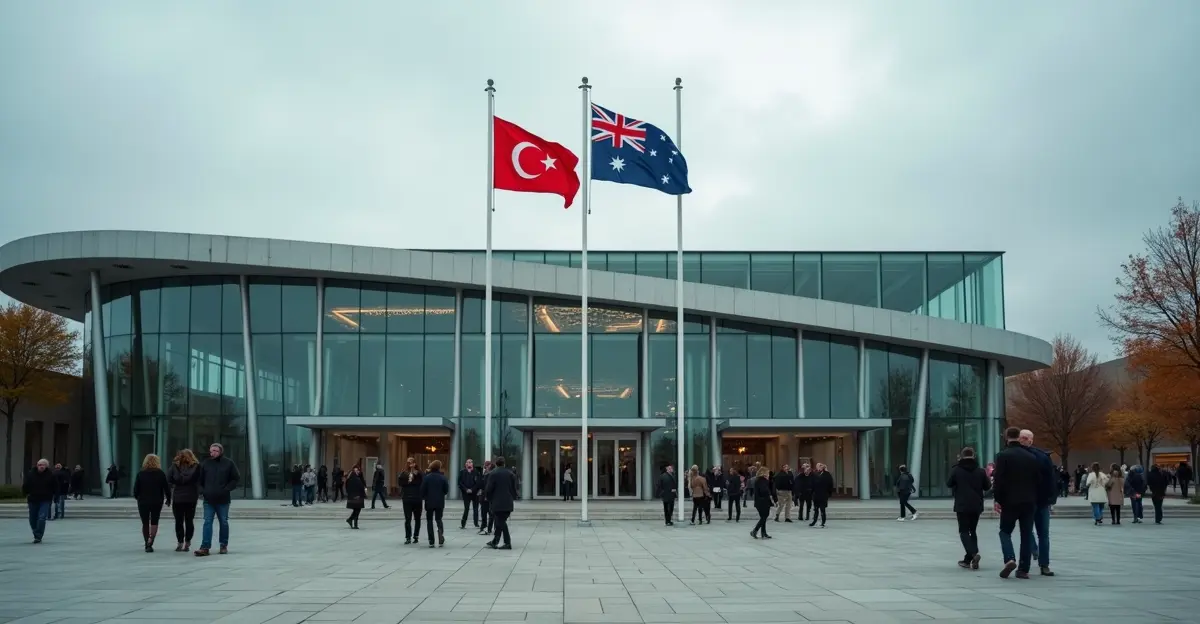
The 31st United Nations Climate Change Conference (COP31), scheduled for November 9-20, 2026 in Antalya, Türkiye, represents an unprecedented innovation in global climate governance. For the first time in UN climate conference history, a dual-presidency model will see Türkiye serve as host while Australia leads formal negotiations, creating a unique partnership that could bridge the persistent divide between developed and developing nations. This groundbreaking arrangement emerges as preparations intensify for the critical summit, which must accelerate implementation of the $1.3 trillion annual climate finance target established at COP30 and transform climate diplomacy from negotiation to concrete action.
What is the COP31 Dual-Presidency Model?
The COP31 dual-presidency represents a diplomatic compromise that ended months of deadlock between Türkiye and Australia, both members of the Western Europe and Others Group (WEOG). Under this unprecedented arrangement, Türkiye's Minister of Environment, Urbanization and Climate Change Murat Kurum serves as COP31 President and host, while Australia's Climate Change Minister Chris Bowen assumes the role of President of Negotiations with exclusive authority over the formal negotiation process. This division of responsibilities marks a significant departure from traditional COP structures where a single nation handles both hosting and negotiation leadership.
The agreement, reached at COP30 in Belém, Brazil, positions Australia to shape global climate decision-making from the conclusion of COP30 through the end of COP31. 'This partnership demonstrates practical global cooperation and elevates Pacific climate priorities on the world stage,' stated Minister Bowen in a joint media release. Türkiye, hosting its first UN climate conference, will coordinate all administrative and logistical aspects while positioning itself as a bridge between developing and developed nations in climate negotiations.
Strategic Implications for Global Climate Governance
Bridging the Developed-Developing Country Divide
The Türkiye-Australia partnership creates a unique geopolitical configuration that could address longstanding tensions in climate negotiations. Türkiye, classified as a developing country with significant climate vulnerabilities, brings credibility with the Global South, while Australia, a major developed economy and fossil fuel exporter, maintains influence with industrialized nations. This dual perspective could facilitate breakthroughs on contentious issues like climate finance distribution, loss and damage implementation, and fossil fuel transition timelines.
The arrangement also continues an unprecedented sequence of Southern Hemisphere COPs designed to amplify underrepresented voices in global climate negotiations. Following Brazil's COP30 presidency, the Pacific Island nations climate priorities will receive elevated attention through Australia's commitment to host a special pre-COP meeting in the Pacific region. This geographical shift represents a deliberate effort to center climate discussions around communities experiencing the most severe climate impacts.
Accelerating the $1.3 Trillion Climate Finance Implementation
COP31 faces the monumental task of operationalizing the landmark $1.3 trillion annual climate finance goal for developing countries by 2035, established at COP30. This target requires a seven-fold increase from current funding levels and represents one of the most ambitious financial commitments in climate history. The dual-presidency model could prove particularly effective in mobilizing this unprecedented capital flow.
Türkiye's experience with zero waste and circular economy initiatives provides practical implementation expertise, while Australia's financial sector connections and experience with large-scale renewable energy projects offer crucial investment mobilization capabilities. According to World Resources Institute analysis, achieving the $1.3 trillion target requires leveraging five financial levers identified in the Baku-to-Belém Roadmap, which the dual-presidency is uniquely positioned to advance.
Transforming Climate Diplomacy from Negotiation to Action
From Talk to Implementation
The COP31 leadership has explicitly framed the conference as marking a transition to an 'implementation era' in global climate action. UN Climate Change Executive Secretary Simon Stiell emphasized that 'in the current period of global instability, climate action can provide stability and we need to move to a new implementation period.' This shift from negotiation to execution represents a fundamental reorientation of the UN climate process.
The dual-presidency structure supports this transition by separating negotiation leadership from hosting responsibilities, allowing each partner to focus on their comparative advantages. Australia will concentrate on securing ambitious negotiation outcomes, including potentially advancing fossil fuel phase-out language that proved elusive at COP30, while Türkiye focuses on creating an operational environment conducive to practical implementation discussions.
Southern Hemisphere Leadership in Climate Talks
The consecutive Southern Hemisphere COPs (Brazil 2025, Türkiye 2026, Ethiopia 2027) represent a deliberate rebalancing of climate diplomacy geography. This sequence ensures that climate-vulnerable regions maintain momentum and influence in the critical years leading to 2030 climate targets. Australia's role as negotiation president, despite being a developed nation, maintains this Southern Hemisphere continuity while bringing developed country resources and influence to the process.
The arrangement also addresses specific Pacific Island concerns, with Australia committing to showcase climate impacts on island nations through its pre-COP event. This geographic focus responds to criticisms that previous COPs insufficiently centered the experiences of communities facing existential climate threats.
Potential Precedents for Future Climate Diplomacy
The COP31 dual-presidency model could establish important precedents for future UN climate conferences. If successful, this innovative governance structure might inspire similar arrangements for future COPs, particularly when diplomatic deadlocks occur or when complementary national strengths could enhance conference outcomes. The model demonstrates flexibility in the UNFCCC process and acknowledges that climate leadership can take multiple forms beyond traditional single-country presidencies.
However, the arrangement also faces challenges, including potential coordination difficulties between the two presidencies and questions about accountability mechanisms. The success of COP31 will depend heavily on effective collaboration between Türkiye and Australia, transparent decision-making processes, and clear communication channels to avoid confusion among participating nations.
Expert Perspectives on the Dual-Presidency Innovation
Climate governance experts note that the dual-presidency represents both opportunity and risk. 'This innovative model could break through traditional negotiating blocks by leveraging complementary national perspectives,' observed one diplomatic analyst. 'However, it also creates complexity in leadership structures that could slow decision-making if not carefully managed.' The arrangement's success will be measured by its ability to deliver concrete outcomes on climate finance implementation, adaptation funding tripling, and operationalizing the loss and damage fund established at previous COPs.
Minister Kurum has emphasized that COP31 will operate under the principles of 'Dialogue, Consensus and Action,' suggesting a pragmatic approach focused on achievable outcomes rather than ideological positioning. This orientation aligns with the implementation-focused agenda and could help bridge the persistent gap between climate commitments and actual emission reductions.
Frequently Asked Questions About COP31 Dual-Presidency
What is the COP31 dual-presidency model?
The COP31 dual-presidency is an unprecedented arrangement where Türkiye hosts the conference in Antalya while Australia leads formal negotiations as President of Negotiations, marking the first time these responsibilities are separated between two nations.
When and where will COP31 take place?
COP31 will be held in Antalya, Türkiye from November 9-20, 2026, at the Antalya Congress Center, with Antalya International Airport serving as the primary gateway for participants from over 100 countries.
What are the key goals for COP31?
Key objectives include implementing the $1.3 trillion annual climate finance target by 2035, tripling adaptation funding, operationalizing the loss and damage fund, and advancing fossil fuel transition roadmaps while bridging developed-developing country divides.
How does this model benefit climate negotiations?
The dual-presidency leverages complementary national perspectives—Türkiye's developing country credibility and Australia's developed economy influence—to potentially break through traditional negotiating blocks and accelerate implementation of climate commitments.
What precedent does this set for future COPs?
If successful, the model could inspire similar arrangements for future climate conferences, demonstrating flexibility in UNFCCC governance and acknowledging that climate leadership can take multiple forms beyond single-country presidencies.
Conclusion: A Transformative Moment in Climate Governance
The COP31 dual-presidency represents a bold experiment in global climate governance at a critical juncture in the climate crisis. As the world approaches 2030 climate targets with insufficient progress, innovative approaches to international cooperation become increasingly necessary. The Türkiye-Australia partnership offers a potential template for more effective climate diplomacy that leverages complementary national strengths while maintaining the urgency of implementation.
The success of this model will be measured not by diplomatic innovations alone, but by concrete outcomes: whether the $1.3 trillion climate finance target moves from commitment to capital flows, whether adaptation funding reaches vulnerable communities, and whether fossil fuel transition accelerates sufficiently to maintain the 1.5°C warming limit. As preparations intensify for November 2026, the global climate community watches closely to see if this unprecedented governance structure can deliver the transformative action the climate crisis demands.
Sources
UNFCCC COP31 Official Page, Türkiye COP31 Presidency Announcement, Australia COP31 Negotiations Role, WRI COP30 $1.3 Trillion Analysis, UN News COP30 Outcomes






Follow Discussion