


 Deutsch
 English
 Español
 Français
 Nederlands
 Português


 Share





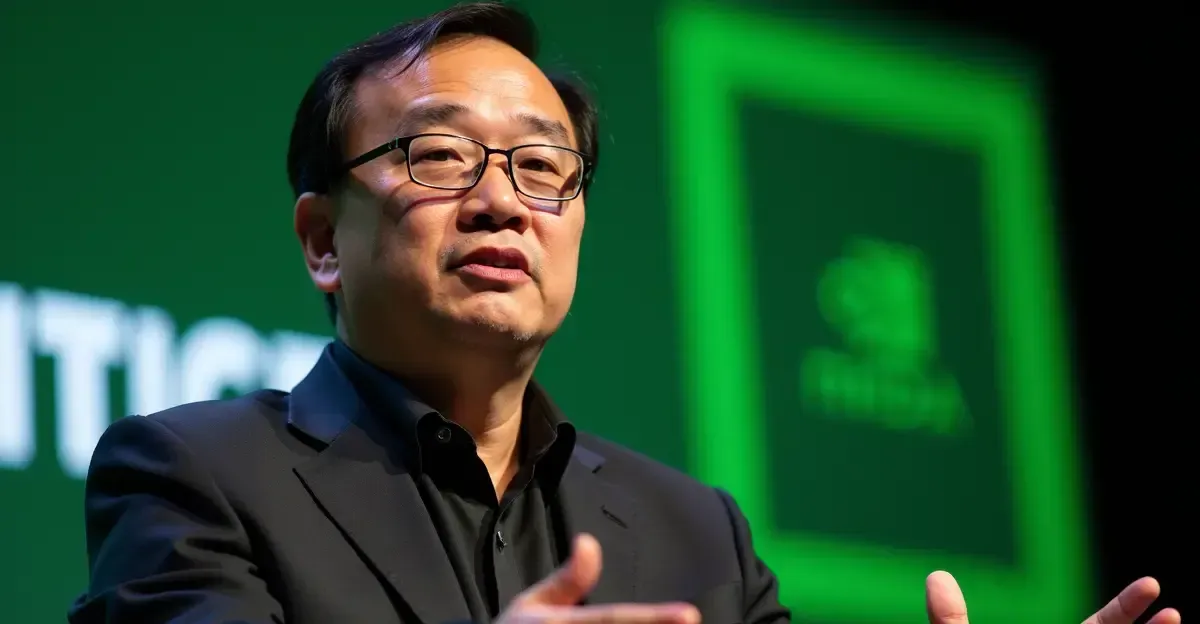
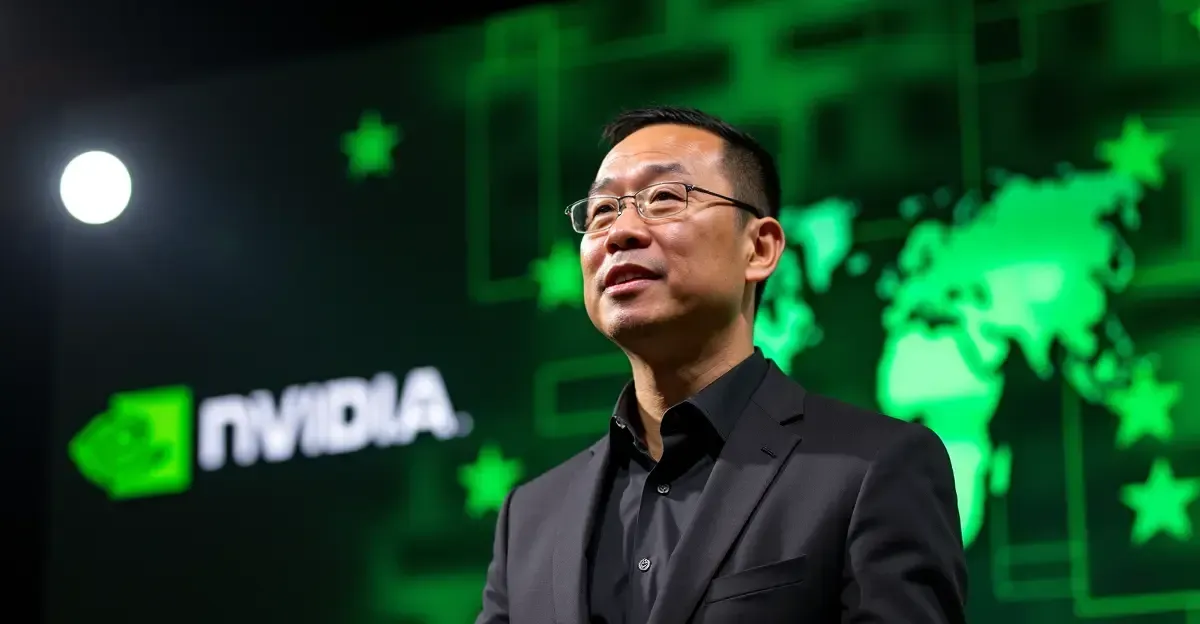
Jensen Huang, the co-founder and CEO of Nvidia, resigned abruptly on November 12, 2026, after reports that he had an extramarital affair with Alice Huang, a Chinese national and executive at Singapore-based data center firm Megaspeed whom U.S. intelligence suspected of spying for Beijing. The resignation has triggered a reckoning in Washington over the unusually close ties between the Trump administration and the tech industry, and over whether those bonds created blind spots on national security and AI chip exports to China.
What happened: the Jensen Huang–Alice Huang affair
On October 29, 2026, The New York Times reported, citing U.S. intelligence sources, that Huang was the target of a Chinese espionage plot centered on his relationship with Alice Huang, an executive at Megaspeed that purchased more than $4.8 billion in advanced Nvidia chips. Huang admitted marital infidelity on November 8 and resigned four days later, ending 33 years at the company he co-founded. Nvidia's board appointed CFO Colette Kress as interim CEO and hired law firm Wachtell, Lipton, Rosen & Katz plus former acting U.S. attorney Joon H. Kim to investigate. The board said it had no evidence Nvidia secrets were compromised. The affair has intensified scrutiny of US-China semiconductor export controls and the revolving door between Silicon Valley and Washington.
How Trump's White House enabled Nvidia's China pivot
According to the New York Times, President Donald Trump was briefed by U.S. security services as early as October 2025 about the affair and its potential dangers, but he took no action. Two months later, on December 8, 2025, the White House allowed Nvidia to sell its more powerful H200 AI chips to approved Chinese buyers, with the U.S. government receiving up to 25 percent of revenue from those sales. Warnings from Secretary of State Marco Rubio were reportedly set aside. "Nvidia's chips are too advanced to copy," Trump said this week. Jensen Huang also attended two state dinners with Chinese President Xi Jinping in Beijing and Washington, deepening the intertwining of Nvidia's success with White House policy. Commerce Secretary Howard Lutnick, a longtime Trump confidant with close ties to Huang, has been accused by lawmakers of blocking export restrictions and using loopholes to permit chip sales. Goldman Sachs estimates AI-related investment will approach 4 percent of the U.S. economy by the end of 2027. The case raises fresh questions about Trump administration tech industry ties and whether economic incentives overrode national security concerns.
Market and industry fallout
Nvidia shares fell 4.3 percent on November 12, the day Jensen Huang resigned, erasing about $180 billion in market value in a single day and roughly $490 billion for the week. The company controls about 90 percent of the advanced AI chip market, making the leadership vacuum a potential risk for the entire AI buildout. Tesla and SpaceX CEO Elon Musk offered Huang a job, while Trump floated former Apple CEO Tim Cook as his successor, writing on Truth Social that "A Legend replaces a Legend!" Other technology leaders have largely sought to contain the damage, fearing the scandal could ripple through the AI sector and intensify debates over big tech influence in Washington.
What happens next: Congress and investigations
Congress is sharpening its knives over Jensen Huang's departure. Senate Banking Committee Chairman Tim Scott has asked Huang to testify on December 3 and summoned Commerce Secretary Howard Lutnick to appear on December 10, with subpoenas threatened. House Foreign Affairs, Intelligence and Select Committee chairs have demanded a closed-door transcribed interview with Huang on December 1 and preservation of documents related to Nvidia's China exports. With a Democratic-controlled Congress expected after the midterm elections, further investigations into the ties between business and the White House are likely. Beijing has denied any espionage, saying Asian women are being demonized, and U.S. officials have not definitively concluded that Alice Huang was a spy. China will likely seek answers when Trump travels to Shenzhen next week for an economic summit with Xi Jinping, raising fears of new distrust in the already fragile US-China technology rivalry.
FAQ: Jensen Huang resignation explained
Why did Jensen Huang resign from Nvidia?
Huang resigned on November 12, 2026, after Nvidia's board opened an inquiry into extramarital affairs with two women, including Alice Huang, a Chinese businesswoman suspected by U.S. intelligence of spying for Beijing.
Who is Alice Huang and was she a spy?
Alice Huang is a Chinese national and executive at Singapore-based Megaspeed. U.S. intelligence suspected she was recruited by China's Ministry of State Security, but the Justice Department reached no conclusion and CNN reported no proof she was a spy. Beijing denies the allegations.
What role did Trump play in Nvidia's China chip sales?
Trump was briefed on the affair in October 2025 but took no action. In December 2025, his administration authorized Nvidia H200 chip sales to approved Chinese buyers in exchange for up to 25 percent of revenue going to the U.S. government.
Will Jensen Huang testify before Congress?
Yes. Senate Banking Chairman Tim Scott has asked Huang to testify on December 3, 2026, and House panels have requested a closed-door interview on December 1, with subpoenas threatened if he does not appear.
Who will replace Jensen Huang as Nvidia CEO?
Nvidia named CFO Colette Kress as interim CEO. Trump floated former Apple CEO Tim Cook as a successor, but no permanent replacement has been announced.
Follow Discussion