


 Deutsch
 English
 Español
 Français
 Nederlands
 Português


 Share
Share




Elon Musk Demands Sam Altman's Removal as OpenAI CEO in Escalating Legal Battle
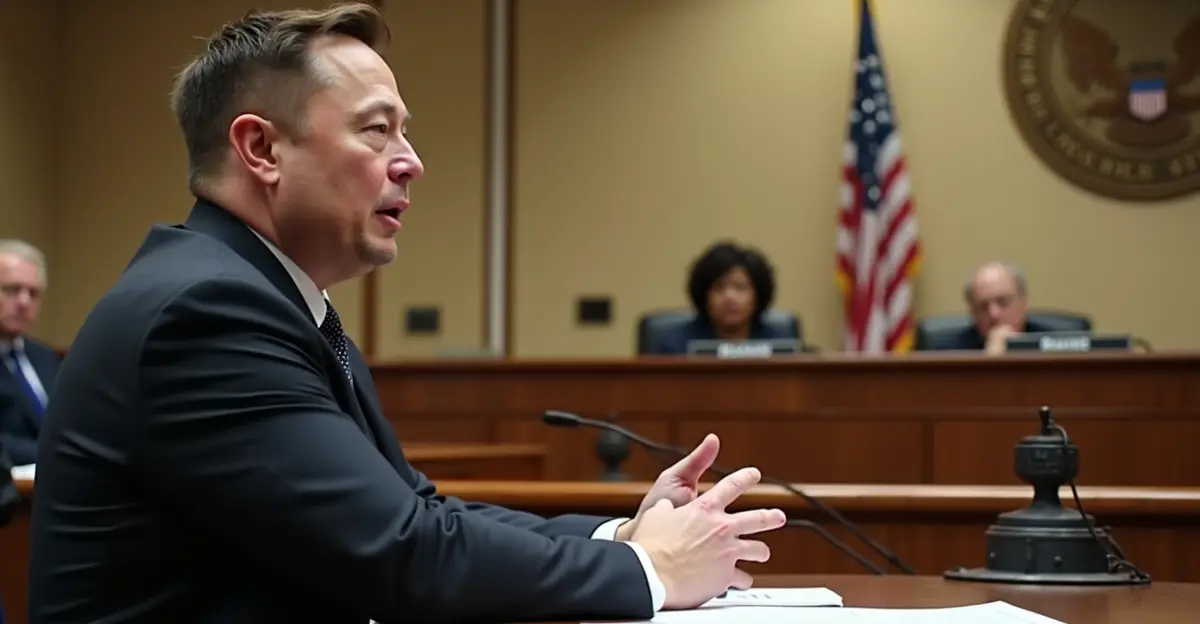
Elon Musk has escalated his legal battle against OpenAI by demanding the removal of CEO Sam Altman and President Greg Brockman from their leadership positions. The Tesla and SpaceX billionaire, who co-founded OpenAI in 2015, filed new court documents seeking to oust the executives as part of a lawsuit alleging the artificial intelligence company abandoned its original nonprofit mission. This dramatic development comes just weeks before the scheduled April 27, 2026 trial date in Oakland, California federal court, where Musk is seeking damages that could reach $134 billion.
What is the OpenAI Legal Battle About?
The legal dispute centers on OpenAI's transformation from a nonprofit research organization to a for-profit entity valued at $500 billion. Musk alleges that OpenAI deceived him into donating $38 million based on promises the company would remain a nonprofit dedicated to developing safe artificial general intelligence (AGI) for humanity's benefit. Instead, under Altman's leadership, OpenAI has become a commercial powerhouse with major partnerships including Microsoft's $13 billion investment and the wildly successful ChatGPT launch in 2022.
Musk's lawsuit, originally filed in 2024, claims OpenAI manipulated him and other early supporters by secretly planning to create for-profit arms while publicly maintaining its nonprofit status. The billionaire argues this represents a fundamental betrayal of the organization's founding principles established in 2015 when Musk, Altman, and others pledged to prioritize humanity's interests over commercial gain.
Musk's Specific Demands in the 2026 Filing
In his latest legal filing, Musk's lawyers have outlined several specific remedies they're seeking if the court finds OpenAI and its leadership liable:
- Removal of Sam Altman from OpenAI's nonprofit board of directors
- Dismissal of both Altman and Greg Brockman as officers of OpenAI's for-profit entity
- Forcing OpenAI to revert to operating as an actual nonprofit organization
- Return of all "ill-gotten gains" to the nonprofit, including Microsoft's investments
- Potential damages of $134 billion to be directed to OpenAI's nonprofit division
The lawsuit represents one of the most significant corporate governance battles in technology history, pitting one of the world's richest entrepreneurs against the company he helped create. Similar to the 2025 tech antitrust cases that reshaped Silicon Valley, this case could have far-reaching implications for how AI companies balance commercial success with ethical commitments.
OpenAI's Response: "Harassment Campaign Driven by Ego"
OpenAI has vehemently rejected Musk's allegations, calling the lawsuit "a harassment campaign driven by ego, jealousy, and a desire to slow down a competitor." In official statements, the company has accused Musk of attempting to gain influence and undermine competition in the AI sector, particularly since he left OpenAI in 2018 and founded his own competing AI company, xAI, in 2023.
"This lawsuit is about Musk seeking more power and money rather than genuine concerns about our mission," said OpenAI Chief Strategy Officer Jason Kwon in a recent statement. "He left OpenAI years ago and now wants to change the narrative as our trial approaches."
The company has also sought investigations into what it describes as "improper and anti-competitive behaviour" by Musk and his associates, including allegations that Musk coordinated with Meta CEO Mark Zuckerberg to undermine OpenAI's position in the market.
Trial Timeline and Key Dates
The legal showdown is scheduled to begin with jury selection on April 27, 2026, at the Oakland, California federal courthouse. The trial will be overseen by U.S. District Judge Yvonne Gonzalez Rogers, who has experience handling high-profile technology cases. Key aspects of the trial include:
| Date | Event | Significance |
|---|---|---|
| April 27, 2026 | Jury Selection Begins | Start of trial proceedings |
| May 2026 | Opening Arguments | Both sides present their cases |
| June 2026 | Witness Testimony | Musk, Altman, Brockman expected to testify |
| July 2026 | Closing Arguments | Final presentations to jury |
| August 2026 | Verdict Expected | Potential resolution of case |
Broader Implications for AI Industry
This legal battle highlights growing tensions in the artificial intelligence industry over control of advanced AI systems and their governance. The case raises fundamental questions about whether AI companies can maintain ethical commitments while pursuing commercial success, and whether founders retain rights to enforce original missions after leaving organizations. Unlike the EU AI regulation framework that focuses on external oversight, this case centers on internal governance and founder rights.
The outcome could set important precedents for how technology companies balance profit motives with public benefit commitments. If Musk succeeds in forcing OpenAI to revert to nonprofit status, it could dramatically reshape the AI landscape and potentially limit commercial development of advanced AI systems. Conversely, a victory for OpenAI would reinforce the legitimacy of its current hybrid structure and potentially encourage more AI companies to adopt similar models.
Frequently Asked Questions
Why is Elon Musk suing OpenAI?
Elon Musk is suing OpenAI because he believes the company deceived him by promising to remain a nonprofit while secretly planning to become a for-profit entity. He donated $38 million based on these representations and claims the company has abandoned its original mission to develop safe AGI for humanity's benefit.
What does Musk want from the lawsuit?
Musk wants Sam Altman and Greg Brockman removed from their leadership positions, OpenAI returned to nonprofit status, and damages of up to $134 billion directed to the nonprofit organization rather than to himself personally.
When does the trial start?
Jury selection for the trial is scheduled to begin on April 27, 2026, in Oakland, California federal court. The trial is expected to last several months.
How has OpenAI responded?
OpenAI has called the lawsuit "a harassment campaign driven by ego, jealousy, and a desire to slow down a competitor." The company maintains that Musk is motivated by business rivalry since he founded competing AI company xAI in 2023.
What are the potential outcomes?
Potential outcomes range from Musk winning his demands for leadership changes and nonprofit reversion, to OpenAI successfully defending its current structure, to some negotiated settlement between the parties. The case could also establish important precedents for tech company governance and AI ethics.

Follow Discussion