


 Deutsch
 English
 Español
 Français
 Nederlands
 Português


 Share
Share




AI Data Centers Create 'Data Heat Islands' Warming Local Areas Up to 9.1°C
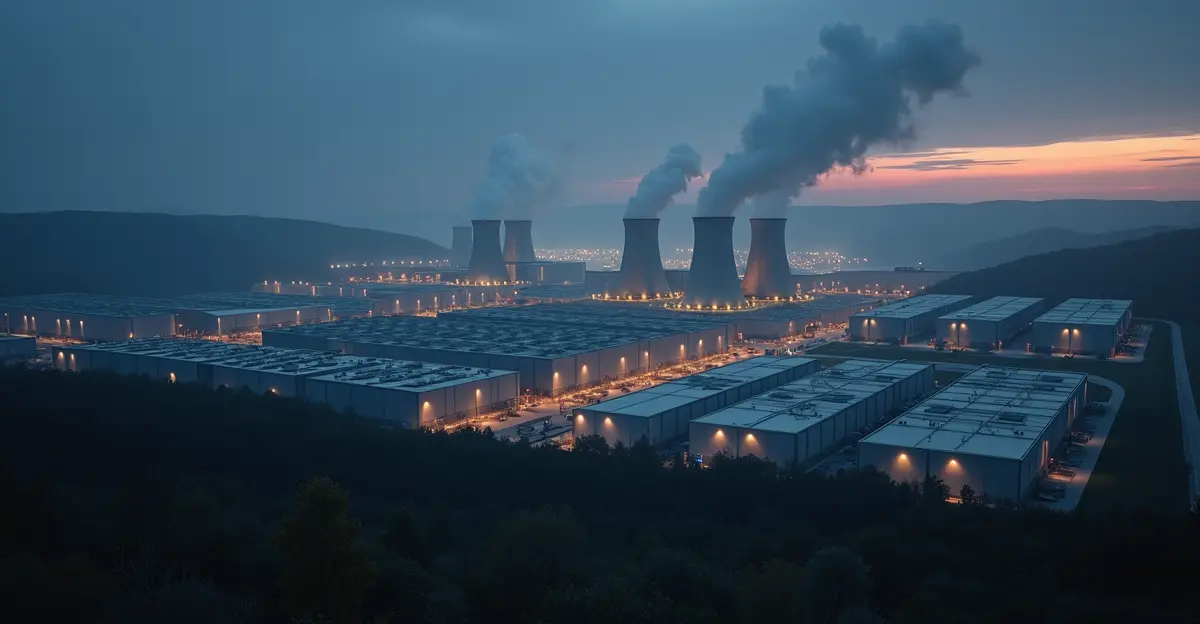
A groundbreaking study reveals that AI data centers are creating significant 'data heat islands' that warm surrounding areas by an average of 2°C, with extreme cases reaching 9.1°C temperature increases. Researchers analyzing satellite data from 8,400 AI data centers worldwide found these facilities create their own microclimates affecting areas up to ten kilometers away, raising urgent environmental concerns as AI infrastructure expands exponentially.
What is the Data Heat Island Effect?
The 'data heat island effect' refers to localized temperature increases caused by AI data center operations, similar to urban heat islands but specifically driven by computing infrastructure. Researchers combined historical satellite temperature measurements with GPS coordinates of 8,400 AI data centers, excluding facilities near densely populated areas to isolate the effect. 'The results we had were quite surprising,' says lead researcher Andrea Marinoni to NewScientist. 'This could become a huge problem.'
Key Research Findings
The comprehensive study published on arXiv reveals several critical findings:
- Average temperature increase: 2°C in months following AI data center activation
- Maximum recorded increase: 9.1°C in extreme cases
- Impact radius: Temperature effects observed up to 10 kilometers away
- Intensity reduction: Heating effects decrease to 30% at 7 kilometers distance
- Global impact: Could affect over 340 million people worldwide
How AI Data Centers Create Local Warming
AI data centers generate substantial heat through two primary cooling methods that contribute to local temperature increases. The first involves ventilation systems that blow heated air directly into the outdoor environment. The second uses water cooling systems where water circulates through servers, absorbing heat before being discharged as warm or evaporated water. These processes create concentrated heat plumes that alter local microclimates.
Professor David Smeulders of Eindhoven University of Technology notes the complexity: 'It's questionable whether this heating is caused by data production or simply by the mass of those hyperscale data centers. They're hectares in size, creating enormous volumes where vegetation typically has to make way.' This effect resembles urban development patterns where built environments naturally retain more heat than natural landscapes.
Projected Growth and Environmental Concerns
Real estate experts project that data center capacity will double between 2025 and 2030, with AI accounting for half of this growth. This expansion coincides with increasing concerns about sustainable technology infrastructure and environmental regulation. Current estimates suggest AI data centers could consume over 40% of total data center power by 2026, with annual consumption reaching 90 TWh—a tenfold increase from 2022 levels.
Industry Response and Cooling Solutions
The technology industry faces mounting pressure to address these environmental impacts. Major companies are exploring advanced cooling technologies including:
| Cooling Method | Description | Environmental Impact |
|---|---|---|
| Liquid Immersion Cooling | Servers submerged in non-conductive fluid | Reduces water usage by 90% |
| Advanced Air Cooling | Optimized ventilation with heat recovery | Can reduce energy consumption by 40% |
| Water Recycling Systems | Closed-loop cooling with water treatment | Minimizes freshwater consumption |
| District Heating Integration | Waste heat used for community heating | Turns waste into resource |
These innovations represent the industry's response to growing concerns about corporate environmental responsibility and sustainable development.
Global Implications and Policy Considerations
The research highlights significant implications for communities and regional welfare. 'Our results show that the data heat island effect could have a considerable impact on communities and regional welfare in the future,' writes Marinoni in the research report introduction. This phenomenon should become 'an important part of the global debate about environmentally friendly AI.'
Governments worldwide are beginning to implement policies addressing AI infrastructure environmental impacts. The European Union's digital sustainability regulations and proposed carbon accounting standards for data centers represent early regulatory responses to these challenges.
Frequently Asked Questions
How much do AI data centers increase local temperatures?
AI data centers increase local temperatures by an average of 2°C, with extreme cases reaching 9.1°C increases according to satellite data analysis of 8,400 facilities worldwide.
How far does the heating effect extend from data centers?
The heating effect extends up to 10 kilometers from data centers, with intensity decreasing to 30% at 7 kilometers distance from the facility.
What causes AI data centers to heat their surroundings?
Two primary factors contribute: ventilation systems releasing heated air outdoors, and water cooling systems discharging warm water, combined with the physical mass of facilities replacing natural vegetation.
How will AI data center growth affect future temperatures?
With data center capacity projected to double between 2025-2030 (AI accounting for half), localized heating effects could become more widespread, potentially affecting hundreds of millions of people globally.
What solutions exist for reducing data center heating?
Advanced cooling technologies like liquid immersion cooling, heat recovery systems, strategic siting in cooler regions, and integrating waste heat into district heating networks can mitigate environmental impacts.





Follow Discussion