Nederlands
 English
 Deutsch
 Français
 Español
 Português





AI Revolutionizes Air Quality Prediction and Public Health Protection
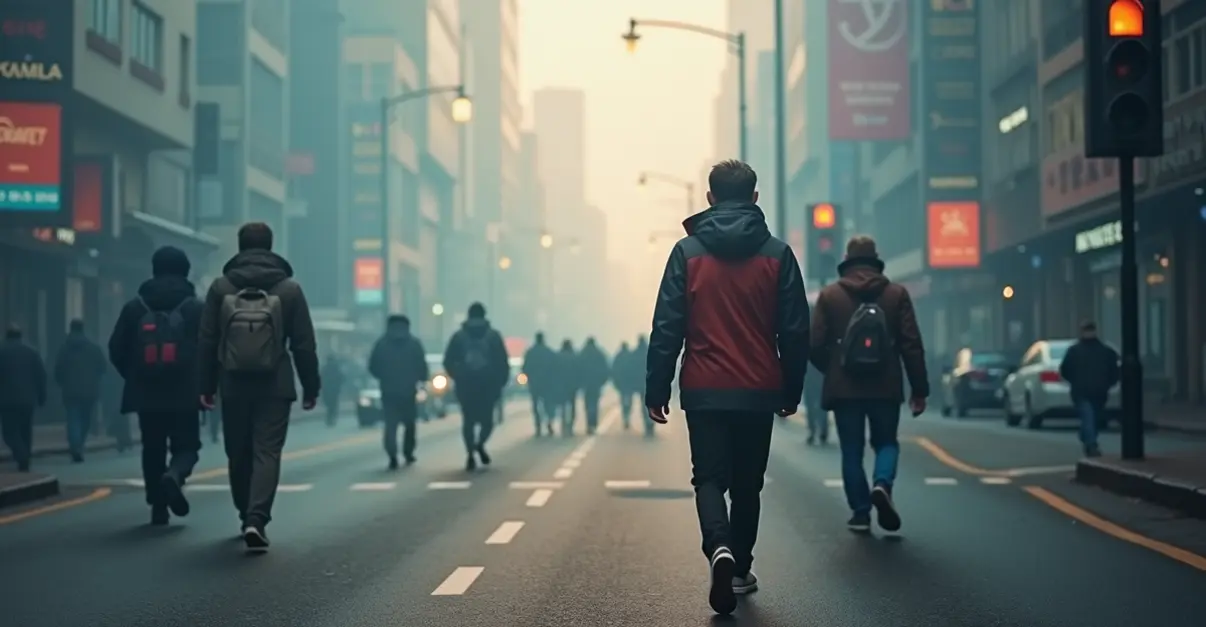
In 2025, artificial intelligence is transforming how we monitor, predict, and respond to air pollution, creating more accurate warning systems that protect public health. Advanced AI models are now achieving unprecedented accuracy in forecasting air quality, with some machine learning techniques reaching up to 98.2% prediction accuracy according to a 2025 systematic review in Environmental Modelling & Software. These sophisticated systems integrate diverse data sources including satellite imagery, ground sensors, weather patterns, and traffic data to create comprehensive pollution maps that reveal street-level pollution hotspots traditional models often miss.
How AI Forecasting Works
Modern AI air quality systems use a combination of machine learning and deep learning approaches. Random Forest algorithms currently dominate the field, but deep learning architectures like Long Short-Term Memory (LSTM) networks are gaining prominence for their ability to capture complex spatiotemporal patterns. 'The real breakthrough comes from integrating multiple data streams in real-time,' explains Dr. Sarah Chen, an environmental data scientist at Stanford University. 'We're no longer just looking at isolated sensor readings - we're combining satellite data, weather forecasts, traffic patterns, and even social media reports to create a holistic picture of air quality.'
These systems work by continuously analyzing data from thousands of sources. Ground sensors provide localized measurements, while satellite imagery offers broader regional perspectives. Weather data helps predict how pollution will disperse, and traffic information identifies potential emission sources. AI algorithms process all this information simultaneously, identifying patterns and making predictions hours to weeks in advance.
Integration with Mobile Apps and Public Advisories
The most significant advancement in 2025 is how these AI forecasts are reaching the public. Leading air quality apps like Paku, Breathe, Local Haze, IQAir AirVisual, and Apple Weather are integrating AI-powered predictions to provide users with personalized alerts and recommendations. According to a 2025 guide to top smartphone air quality apps, these applications now offer features like customizable radius settings, exposure tracking, and subscription-based premium services that provide more detailed forecasts.
Public health agencies are leveraging these technologies to issue more targeted advisories. 'We can now warn specific neighborhoods about impending pollution events rather than issuing blanket city-wide alerts,' says Michael Rodriguez, director of air quality management for Los Angeles County. 'This precision allows us to protect vulnerable populations more effectively while minimizing unnecessary disruptions for others.'
The integration works through cloud-based architectures that enable continuous data flow. AI systems generate visual risk maps and health advisories every five minutes, forecasting pollution trends while identifying vulnerable populations through spatial overlays. When pollution levels are predicted to exceed safe thresholds, automated alerts are sent to mobile apps, government websites, and emergency notification systems.
Benefits for Public Health
The improved accuracy of AI forecasting has significant implications for public health. Children, the elderly, and individuals with respiratory or cardiovascular conditions are particularly vulnerable to poor air quality. Traditional forecasting methods often provided warnings with limited accuracy and geographic specificity, but AI systems can now predict pollution events with greater precision and lead time.
A 2025 research paper in Scientific Reports describes a machine learning framework that not only predicts pollutant concentrations but also classifies air quality levels and identifies influential environmental variables. This allows public health officials to implement targeted interventions, such as recommending that schools in specific areas keep children indoors or advising hospitals to prepare for increased respiratory cases.
The economic benefits are also substantial. By providing more accurate forecasts, businesses can better plan operations, transportation departments can adjust traffic patterns, and individuals can make informed decisions about outdoor activities. 'We're seeing a reduction in emergency room visits on days when our AI systems accurately predict high pollution events,' notes Dr. Elena Martinez, a public health researcher. 'People are heeding the warnings and taking appropriate precautions.'
Future Developments and Challenges
Despite the progress, challenges remain. Model interpretability and uncertainty quantification are ongoing concerns in the AI community. Researchers are working to make these 'black box' systems more transparent so users can understand how predictions are generated. Additionally, ensuring equitable access to these technologies across different socioeconomic groups remains a priority.
Looking ahead, experts predict further integration with smart city infrastructure, more sophisticated personal exposure tracking, and enhanced international collaboration on air quality monitoring. As AI systems continue to learn from new data, their accuracy is expected to improve even further, potentially reaching near-perfect prediction rates for certain types of pollution events.
The convergence of AI, IoT sensors, and mobile technology is creating a new paradigm in environmental protection. What began as academic research has evolved into practical tools that save lives and improve quality of life for millions of people worldwide. As these systems become more sophisticated and widely adopted, they promise to transform how societies understand and respond to air pollution challenges.