Nederlands
 English
 Deutsch
 Français
 Español
 Português





Disney and OpenAI Forge Historic $1 Billion AI Partnership
In a landmark move that could reshape the entertainment and artificial intelligence landscapes, The Walt Disney Company has announced a three-year, $1 billion partnership with OpenAI that will bring over 200 beloved Disney characters to the Sora AI video generation platform. The agreement, revealed on December 11, 2025, represents one of the most significant collaborations between traditional media and cutting-edge AI technology to date.
Iconic Characters Enter the AI Realm
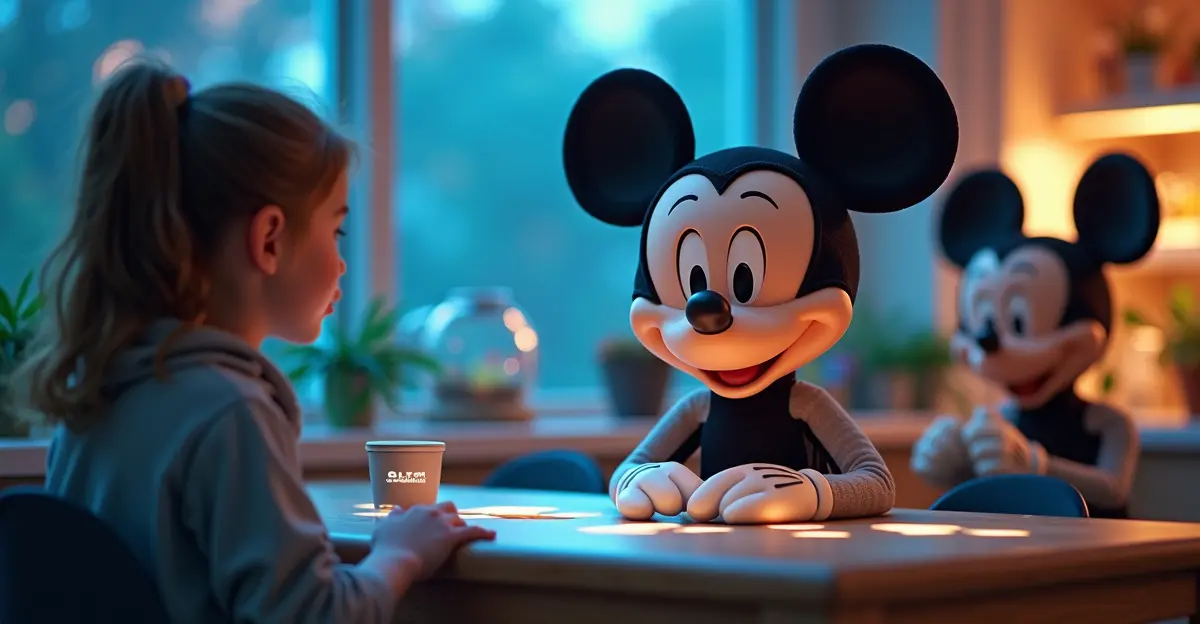
Starting in early 2026, users of OpenAI's Sora video generator will be able to create AI-generated content featuring iconic characters from Disney's vast portfolio. This includes not only classic Disney characters like Mickey Mouse, Minnie Mouse, and Ariel from The Little Mermaid, but also characters from Marvel, Pixar, and Star Wars franchises. Fans will be able to generate videos featuring Iron Man, Darth Vader, Belle from Beauty and the Beast, Stitch from Lilo & Stitch, and many others through simple text prompts.
'This partnership represents a thoughtful extension of our storytelling through generative AI while protecting creators' rights and maintaining robust content controls,' said a Disney spokesperson in the official press release.
Strategic Investment and Technology Integration
The deal involves Disney making a $1 billion equity investment in OpenAI, which was valued at $500 billion following a $6.6 billion share sale in October 2025. Beyond the character licensing, Disney will become a major customer of OpenAI's APIs, using ChatGPT and other AI tools to build new products, services, and 'experiences' for its global audience. Disney employees will also gain access to ChatGPT for their work.
Interestingly, the partnership includes provisions for curated selections of user-generated Sora videos to appear on Disney+, potentially creating a new category of content for the streaming service. However, the agreement explicitly prohibits the use of actual voice recordings from Disney's voice actors, meaning AI-generated characters will need synthetic voices.
Copyright Battles Intensify
The Disney-OpenAI deal comes amid escalating tensions between media companies and tech giants over AI copyright issues. Just days before announcing the OpenAI partnership, Disney sent a cease-and-desist letter to Google alleging 'massive copyright infringement' through Google's AI services including Veo, Imagen, and Nano Banana.
'Google's AI models are commercially distributing unauthorized images and videos of Disney's copyrighted characters on a massive scale,' Disney claimed in its legal correspondence, according to TechCrunch.
Google responded that it uses public web data for AI training and has copyright controls like Content ID, maintaining that it has a 'longstanding relationship' with Disney. This dual approach—partnering with OpenAI while confronting Google—highlights Disney's strategic navigation of the complex AI copyright landscape.
Industry-Wide Copyright Concerns
The entertainment industry has been grappling with AI copyright issues throughout 2025. Earlier this year, Warner Bros. sued AI image generator Midjourney for copyright infringement related to characters like Superman and Scooby-Doo. In Germany, courts ruled that ChatGPT violated copyrights on song lyrics, while in the Netherlands, creators alleged that OpenAI trained its models illegally with their images.
OpenAI itself has faced multiple lawsuits for alleged copyright infringement. The company's approach to Sora has evolved from an initial 'opt-out' system for copyright holders to what appears to be a more collaborative 'opt-in' model with Disney, potentially setting a new industry standard.
Criticism and Child Protection Concerns
Not everyone is celebrating the partnership. Fairplay, a U.S. organization focused on protecting children from marketing and Big Tech, expressed concerns to the Associated Press. 'OpenAI is trying to lure children with Disney characters to its platform,' said a Fairplay representative, warning that this could lead to addiction to AI products.
The criticism highlights the ethical considerations surrounding AI's integration with children's entertainment. Disney and OpenAI have emphasized their commitment to 'responsible AI use' with protections for users and creators, but child advocacy groups remain skeptical about the long-term effects.
The Future of AI-Generated Entertainment
This partnership represents a significant shift in how major entertainment companies approach generative AI. Rather than fighting the technology, Disney is embracing it through strategic partnership. The deal could pave the way for similar agreements between other media giants and AI companies.
As Sora continues to evolve—with its second version released in October 2025 promising even more realistic videos—the integration of beloved characters could dramatically expand creative possibilities for users while creating new revenue streams for Disney. However, it also raises questions about the future of traditional content creation and the role of human artists in an increasingly AI-driven entertainment landscape.
The Disney-OpenAI partnership will be closely watched by the entire entertainment and technology industries as it unfolds over the next three years, potentially setting precedents for copyright, creativity, and collaboration in the AI era.