


 Deutsch
 English
 Español
 Français
 Nederlands
 Português


 Share
Share




What is the F-16 Crash in Turkey?
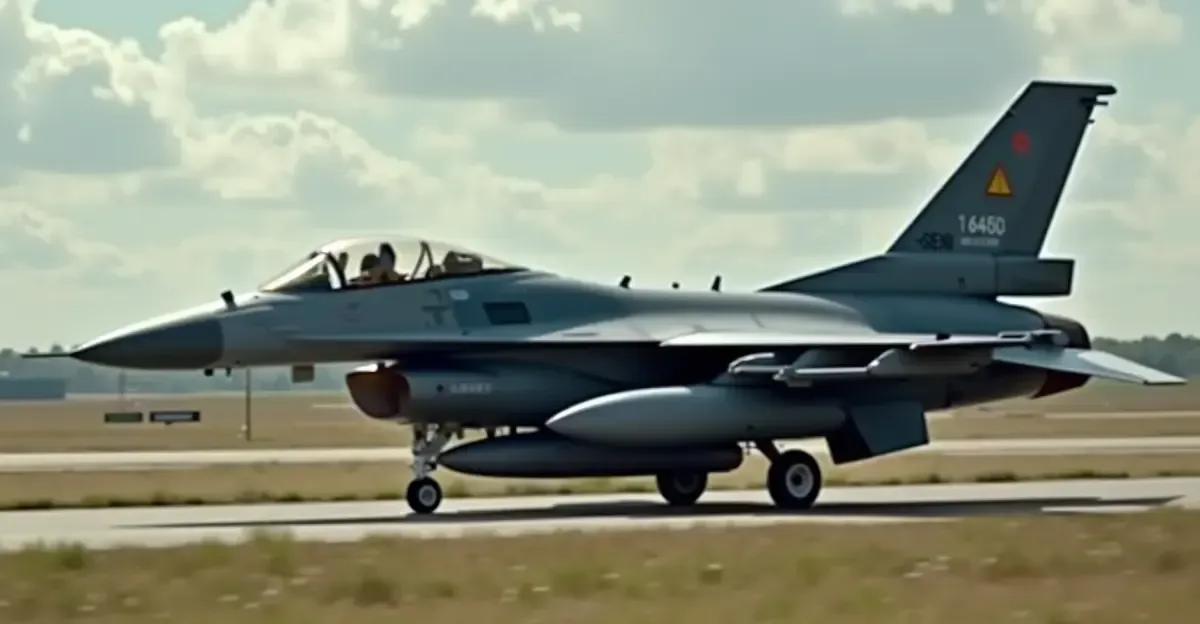
A Turkish Air Force F-16 Fighting Falcon fighter jet crashed shortly after takeoff in western Turkey on February 25, 2026, resulting in the tragic death of its pilot. The aircraft, operating from the 9th Main Jet Base Command in Balıkesir province, lost radio and radar contact around 00:50 local time and went down near the Bursa-İzmir highway in the Karesi district. This military aviation accident marks a significant loss for the Turkish Air Force and raises important questions about fighter jet safety protocols in modern air forces.
Breaking News: Timeline of the F-16 Crash
The incident unfolded during what should have been a routine nighttime training mission. According to official statements from the Turkish Ministry of National Defence, the F-16 took off from Balıkesir Air Base at approximately 12:56 a.m. local time. Within minutes of departure, ground control lost both radio communication and radar tracking with the aircraft.
Emergency Response and Recovery
Immediately after losing contact, Turkish authorities launched a comprehensive search and rescue operation. Emergency teams including military personnel, firefighters, and medical units rushed to the suspected crash area. The wreckage was located in a rural section of Karesi district, dangerously close to the busy Bursa-İzmir highway, which authorities temporarily closed for safety reasons.
Search teams discovered the aircraft's scattered debris and the body of the pilot, identified as Air Force Major Ibrahim Bolat. The Ministry of National Defence officially declared the pilot 'martyred' and extended condolences to his family and colleagues. 'We have lost a valuable pilot in the line of duty,' stated Defense Minister Ismail Ustaoğlu in an official release.
Understanding the F-16 Fighting Falcon
The General Dynamics F-16 Fighting Falcon is a single-engine, supersonic, multirole fourth-generation fighter aircraft that has been a cornerstone of the Turkish Air Force since the 1980s. With over 4,600 units built worldwide, it's the most common fixed-wing military aircraft in service globally as of 2025. Turkey operates one of the largest F-16 fleets outside the United States, with approximately 245 aircraft in active service.
Key Features of the F-16
- Single turbofan engine providing exceptional thrust-to-weight ratio
- Frameless bubble canopy for 360-degree visibility
- Side-stick controller for precise maneuvering
- Fly-by-wire flight control system
- Internal M61 Vulcan 20mm cannon with 11 hardpoints for weapons
- Advanced avionics and radar systems
Investigation and Potential Causes
The Balıkesir Chief Public Prosecutor's Office has launched a formal investigation into the crash, with technical examination teams from both military and civilian agencies participating. While the exact cause remains undetermined pending forensic analysis, aviation experts point to several potential factors:
Possible Contributing Factors
- Mechanical Failure: Engine malfunction, hydraulic system failure, or structural issues
- Technical Difficulties: Avionics or flight control system problems
- Operational Elements: Nighttime flying conditions, pilot workload, or training scenario complexities
- Environmental Factors: Weather conditions or bird strikes
National Defense Minister Yasar Guler emphasized that the incident would be thoroughly examined both judicially and administratively. 'We will leave no stone unturned in determining what happened and preventing similar tragedies,' he stated during a press briefing.
Turkish F-16 Safety Record and Context
This crash adds to a concerning pattern of F-16 accidents involving the Turkish Air Force. While specific statistics vary, military aviation experts note that Turkey has experienced multiple F-16 incidents in recent years, raising questions about maintenance practices, pilot training, and the aging of some aircraft in the fleet.
The Turkish Air Force has been actively modernizing its F-16 fleet through upgrade programs, including the F-16V Viper enhancement package that incorporates advanced radar systems, improved avionics, and enhanced weapons capabilities. However, even upgraded aircraft face operational risks inherent to high-performance military aviation.
Impact on Turkish Air Force Operations
The loss of an F-16 and its experienced pilot represents both an operational and human tragedy for the Turkish military. The incident occurs at a time when Turkey faces complex security challenges in multiple regions, including ongoing operations against Kurdish militants and tensions in the Eastern Mediterranean.
Military analysts suggest the crash may prompt a temporary safety review of F-16 operations, particularly nighttime training missions. However, given the aircraft's critical role in Turkey's defense posture, operational pauses are likely to be brief and targeted rather than fleet-wide.
Global F-16 Safety Considerations
The Turkish crash comes amid broader concerns about F-16 safety worldwide. In recent years, several air forces operating F-16s have experienced accidents, including:
- A Taiwanese F-16V crashing during night training in 2025
- A U.S. Thunderbird F-16C crashing during training (pilot safely ejected)
- Multiple incidents involving various international operators
These incidents highlight the inherent risks of operating high-performance fighter aircraft, particularly as some fleets age and maintenance becomes more challenging. The military aviation accident investigation process typically involves detailed analysis of flight data recorders, maintenance records, and operational procedures to identify systemic issues.
Frequently Asked Questions (FAQ)
What caused the Turkish F-16 crash?
The exact cause remains under investigation by Turkish authorities. Potential factors being examined include mechanical failure, technical issues, operational conditions, and environmental factors.
How many F-16s does Turkey operate?
Turkey operates approximately 245 F-16 Fighting Falcons, making it one of the largest operators of the aircraft outside the United States.
Has the pilot been identified?
Yes, the pilot has been identified as Air Force Major Ibrahim Bolat. The Turkish Ministry of National Defence declared him 'martyred' in the line of duty.
Where exactly did the crash occur?
The F-16 crashed in the Karesi district of Balıkesir province in western Turkey, near the Bursa-İzmir highway.
Will this affect Turkey's F-16 operations?
While a safety review is likely, the F-16 remains critical to Turkey's air defense capabilities, so operational impacts are expected to be temporary and targeted rather than fleet-wide.
Follow Discussion