


 Deutsch
 English
 Español
 Français
 Nederlands
 Português


 Share
Share




Catastrophic Bridge Collapse Traced to Single Loose Wire
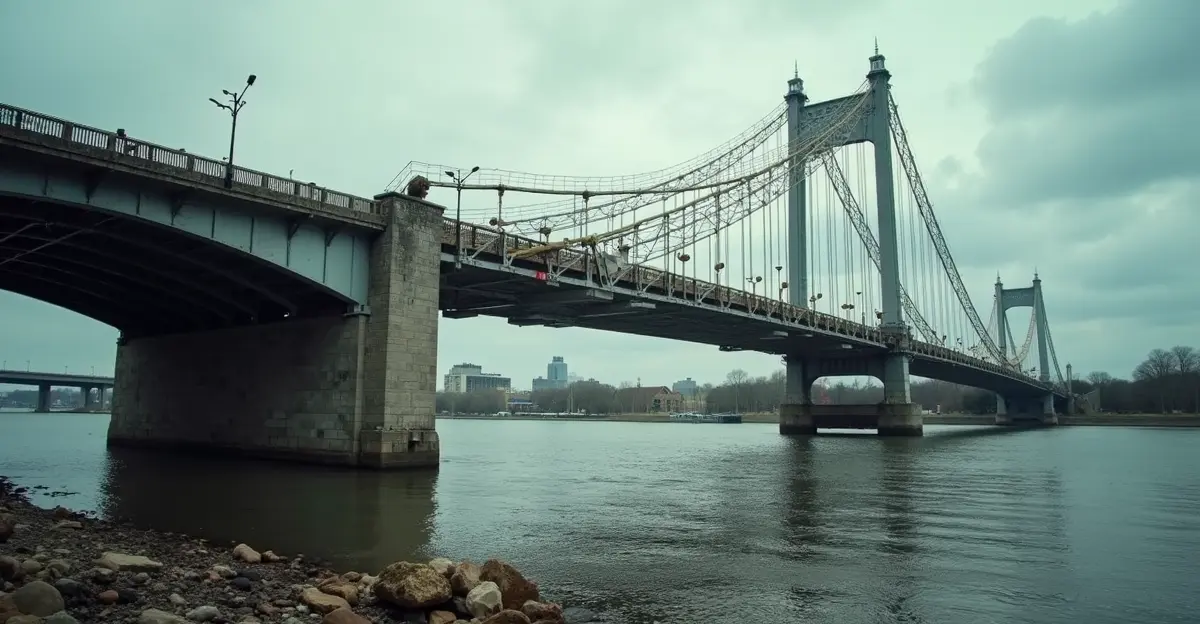
Federal investigators have determined that the catastrophic collapse of Baltimore's Francis Scott Key Bridge in March 2024 was caused by a single loose power cable on the container ship Dali, according to findings released by the National Transportation Safety Board (NTSB). The incident, which killed six construction workers and severed a vital transportation artery, has been described by investigators as 'preventable' and revealed significant safety gaps in both maritime operations and bridge infrastructure.
Domino Effect of Electrical Failure
The investigation revealed that a loose signal wire on the 984-foot container ship triggered a chain reaction that ultimately led to the bridge's destruction. 'The loose wire caused a circuit breaker to trip, creating a domino effect that resulted in complete power loss throughout the vessel,' explained NTSB Chairwoman Jennifer Homendy during a press conference. 'The ship became unsteerable and drifted directly into the bridge support.'
Investigators noted that the wire couldn't be properly connected because a label attached to it was obstructing the connection point. The NTSB compared the search for this single faulty wire to 'finding a loose bolt in the Eiffel Tower,' requiring testing of thousands of cables before identifying the root cause.
Bridge Vulnerability and Human Cost
The Francis Scott Key Bridge, which opened in 1977, was found to be nearly 30 times above the acceptable risk threshold for collapse from vessel strikes established by the American Association of State Highway and Transportation Officials. 'Had the Maryland Transportation Authority conducted proper vulnerability assessments, protective measures could have been implemented,' the NTSB report stated.
The collapse occurred during overnight hours when construction crews were repairing potholes on the bridge deck. All six workers who died were part of this maintenance crew. The investigation also revealed that police stationed at the bridge were notified when the ship veered off course but failed to alert the construction team, potentially denying workers about 1 minute and 29 seconds to evacuate.
National Safety Implications
The NTSB has issued 17 safety recommendations to prevent similar disasters, including using thermal imaging to detect loose wires, implementing warning systems for bridge drivers during emergencies, and improving wire labeling standards. The board has also identified 68 other bridges across 19 states built before 1991 that need immediate risk assessments, including iconic structures like the Golden Gate Bridge and several New York City bridges.
'This tragedy underscores the critical need for comprehensive safety protocols in our maritime and infrastructure systems,' said maritime safety expert Dr. Michael Chen. 'A single loose wire shouldn't be able to cause this level of destruction.'
Reconstruction Challenges and Costs
The replacement bridge project faces significant delays and cost overruns. Originally estimated to cost approximately $1.9 billion and open in 2028, the new bridge is now projected to cost between $4.3-5.2 billion and won't be completed until late 2030. The increased costs and timeline are attributed to a new protection system for the bridge piers and a redesigned structure that will be longer and higher than the original.
The Port of Baltimore, one of the busiest on the East Coast, experienced severe disruptions following the collapse, though the shipping channel was fully reopened after approximately two months. The incident has prompted calls for international shipping standards to require vessels to be better equipped to handle power failures.
Sources: NTSB Official Report, CNN Coverage, USA Today Investigation


Follow Discussion