


 Deutsch
 English
 Español
 Français
 Nederlands
 Português


 Share
Share




The Great Reconfiguration: How 2026 Tariff Volatility Is Reshaping Global Supply Chains
Unprecedented U.S. tariff volatility in 2026 has become the single most disruptive regulatory force in global trade, with 72% of trade professionals citing it as their primary challenge and supply chain concerns nearly doubling year-over-year, according to the Thomson Reuters 2026 Global Trade Report. Companies are responding at scale — 65% are changing sourcing patterns, 57% are renegotiating supplier contracts, and 51% are pursuing nearshoring, with Mexico now the largest U.S. trade partner. Technology adoption is accelerating dramatically, with 40% of firms exploring AI or blockchain for trade management, up from just 6% in 2024, signaling a structural transformation in how global supply chains operate.
Both the KPMG 2026 Global Trade Outlook and the Thomson Reuters 2026 Global Trade Report confirm that the post-April 2025 tariff regime is now transmitting through the global economy, with additional inflation expected in early 2026 as stockpiled inventories are depleted and firms reset prices.
Context: The April 2025 Tariff Shock and Its Aftermath
The Liberty Day tariffs of April 2025 imposed a minimum 10% baseline tariff on a wide range of imports, triggering a cascade of responses across global supply chains. Although the U.S. Supreme Court later ruled the IEEPA-based tariffs unconstitutional in February 2026, the damage was already done. U.S. imports surged over 50% in the first quarter of 2025 as companies front-loaded goods ahead of the tariffs, followed by a sharp contraction in consumer goods and auto imports. The KPMG report notes that tariffs hit employment harder than inflation, with nearly 85% of 2025 job gains occurring before April. Inflation added an estimated 0.5 percentage points to core PCE, but the bigger impact was on business uncertainty.
The 2025 tariff shock and supply chain disruption forced companies to rethink decades-old assumptions about global trade. According to the Thomson Reuters report, 76% of trade professionals now believe the new tariffs represent a permanent shift in U.S. trade policy, not a temporary measure.
Supply Chain Concerns Double: The New Strategic Priority
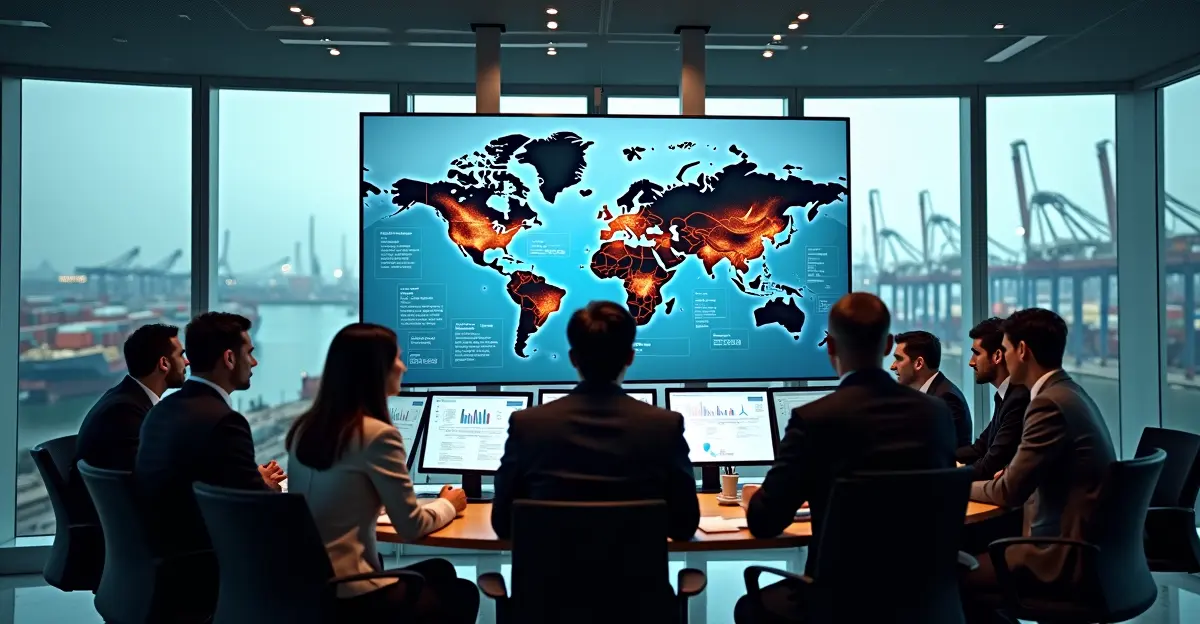
Supply chain management has become the top strategic priority for 68% of respondents in the Thomson Reuters survey, nearly double the 35% recorded in 2025. This dramatic increase reflects the depth of the disruption. The survey of 225 upper-level trade professionals across North America, the EU, UK, Latin America, and Asia Pacific reveals that tariff volatility is now the dominant concern.
Key Findings from the Thomson Reuters 2026 Global Trade Report
- 72% of trade professionals cite U.S. tariff volatility as the most impactful regulatory change (up from 41% in 2025)
- 68% rank supply chain management as a top strategic priority (up from 35%)
- 65% are changing sourcing patterns
- 57% are renegotiating supplier contracts
- 51% are pursuing nearshoring or reshoring
- 39% are absorbing tariff costs rather than passing them to customers (up from 13%)
- 40% are exploring AI or blockchain for trade management (up from 6% in 2024)
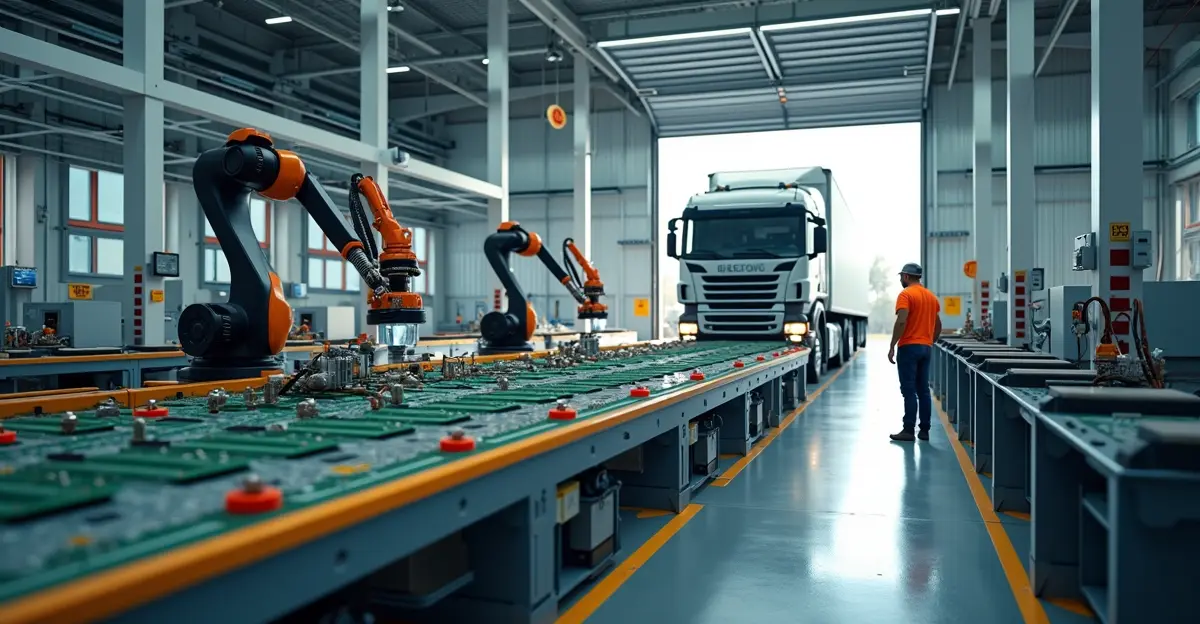
The nearshoring trend reshaping North American trade is particularly notable. Mexico has now surpassed China as the United States' top trading partner, with cross-border trade exceeding $820 billion in 2025. The country received a record $36.8 billion in foreign direct investment in 2024, with approximately 40% driven by nearshoring activities. Key industrial corridors in the Bajío region, Monterrey, and Guadalajara are absorbing significant manufacturing capacity from Asia.
Technology Adoption Surges: AI and Blockchain Go Mainstream
Perhaps the most striking finding is the acceleration of technology adoption. The proportion of firms exploring AI or blockchain for trade management has jumped from just 6% in 2024 to 40% in 2026 — a nearly sevenfold increase. This shift is not merely experimental; companies are moving beyond pilots to embed AI into core supply chain platforms.
KPMG's 2026 supply chain outlook identifies several technology trends: AI-driven demand forecasting now achieves 85-95% accuracy; digital twins are reducing disruptions by 25%; and blockchain is enabling 40% faster supplier onboarding. Global investment in digital transformation is expected to reach $3.4 trillion in 2026, with supply chain modernization as a top priority. By 2026, 73% of supply chain leaders plan to implement advanced digital technologies, up from 45% in 2024.
The AI and blockchain adoption in trade management is enabling companies to model tariff scenarios in real time, automate compliance checks, and trace goods across complex multi-country supply chains. This technological leap is helping firms navigate the uncertainty that traditional planning tools cannot handle.
Inflation Pass-Through: The Next Wave
Both the KPMG and Thomson Reuters reports warn that the full inflationary impact of the tariff regime is yet to be felt. As stockpiled inventories accumulated in early 2025 are depleted, companies will face the choice of absorbing higher costs or passing them to consumers. The KPMG report expects additional inflation in early 2026 as firms reset prices, compounded by a weakening dollar and fiscal stimulus from tax changes. The Peterson Institute for International Economics has flagged the risk of elevated U.S. inflation in 2026, with supply chain disruptions and tariff policies keeping pressure on prices.
The inflation pass-through effects of 2026 tariffs could add 0.5 to 1.0 percentage points to global inflation, according to IMF estimates, as friendshoring and regionalization drive up production costs. Companies now accept 15-25% higher costs for resilience over pure efficiency, marking a fundamental shift from 'just-in-time' to 'just-in-case' manufacturing.
Expert Perspectives
"The tariff volatility we are seeing is not a blip — it represents a structural shift in how global trade operates. Companies that fail to adapt their supply chains for resilience rather than just cost efficiency will find themselves at a competitive disadvantage," said a senior trade analyst at KPMG.
"We are witnessing the most dramatic transformation of global supply chains in decades. The move toward regionalization, technology adoption, and strategic sourcing is not a temporary response but a permanent reconfiguration of the global trading system," noted a Thomson Reuters trade policy expert.
Frequently Asked Questions
What is driving tariff volatility in 2026?
The primary driver is the aftermath of the April 2025 Liberty Day tariffs, which imposed minimum 10% baseline tariffs on imports. Ongoing trade policy uncertainty, including the USMCA review scheduled for July 2026 and new Section 301 investigations targeting over 60 economies, continues to create an unpredictable tariff environment.
How are companies responding to supply chain disruptions?
Companies are adopting multi-pronged strategies: 65% are changing sourcing patterns, 57% renegotiating supplier contracts, 51% pursuing nearshoring, and 40% investing in AI or blockchain technologies. Many are also absorbing tariff costs (39%) rather than passing them to customers.
Why is Mexico becoming the top U.S. trade partner?
Mexico's proximity, USMCA preferential access, labor costs roughly one-fifth of U.S. levels, and existing industrial infrastructure make it an attractive nearshoring destination. Cross-border trade exceeded $820 billion in 2025, and Mexico received a record $36.8 billion in FDI in 2024.
How is technology changing supply chain management?
AI and blockchain adoption has surged from 6% to 40% of firms. AI enables real-time tariff scenario modeling and demand forecasting with 85-95% accuracy, while blockchain improves supplier onboarding speed by 40% and provides end-to-end visibility. Digital twins reduce disruptions by 25%.
Will tariffs cause inflation in 2026?
Yes, both KPMG and Thomson Reuters expect additional inflation in early 2026 as stockpiled inventories are depleted and firms reset prices. The IMF warns that friendshoring could add 0.5-1.0 percentage points to global inflation. The Peterson Institute also flags elevated inflation risk for the U.S.
Conclusion: A Permanent Reconfiguration
The evidence from the KPMG 2026 Global Trade Outlook and Thomson Reuters 2026 Global Trade Report is clear: tariff volatility is not a temporary disruption but a catalyst for permanent structural change in global supply chains. Companies are moving from a world of efficiency-driven globalization to one where resilience, regionalization, and technology adoption are the new imperatives. The future of global trade after 2026 tariff volatility will be defined by agility, strategic sourcing, and digital transformation. Businesses that embrace this reconfiguration will be best positioned to thrive in the new trade landscape.




Follow Discussion