


 Deutsch
 English
 Español
 Français
 Nederlands
 Português


 Share
Share




3D Food Printers 2026: Complete Guide to Supermarket Replacement by 2040
3D food printing technology is rapidly advancing toward potentially replacing traditional supermarkets by 2040, with the market projected to reach $538.14 million by 2035 and growing at a remarkable 31% CAGR. This revolutionary technology enables home-printed meals through layer-by-layer deposition of edible materials, offering unprecedented customization, waste reduction, and nutritional precision that could fundamentally transform how we obtain and consume food.
What is 3D Food Printing?
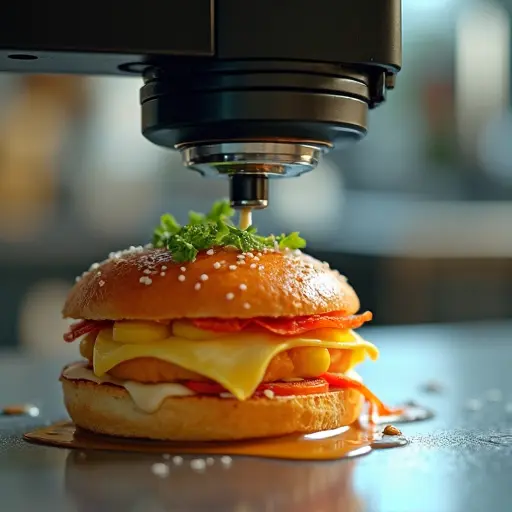
3D food printing is an additive manufacturing process that creates edible objects by depositing food materials layer by layer according to digital designs. Similar to traditional FDM 3D printing but using food-grade materials, this technology works with various edible substances including chocolate, dough, plant proteins, purees, and even cultured meat. The process begins with creating a digital 3D model, which is then sliced into layers and translated into printer instructions that control the deposition of food materials through specialized extrusion systems.
The Current State of 3D Food Printing Technology
Leading 3D Food Printers in 2026
The market now features several advanced 3D food printers that demonstrate the technology's growing capabilities:
- Natural Machines Foodini: Premium multi-ingredient printer with five separate ingredient cartridges for complex recipes
- ByFlow Focus: Professional-grade system offering excellent value for commercial kitchens
- Print2taste Mycusini: Consumer-friendly chocolate printer with over 1,000 pre-designed objects
- Foodbot S2: Budget-friendly option making the technology more accessible
- Aleph Farms' cultured meat printers: Specialized systems for 3D-printing lab-grown meat products
These systems represent the cutting edge of what's possible with personalized nutrition technology today, though significant challenges remain before widespread adoption.
How 3D Food Printing Works: Technical Breakdown
The technology relies on several key components working together:
- Digital Design: Creation of 3D models using specialized software or scanning existing objects
- Material Preparation: Food ingredients are processed into printable forms with specific rheological properties
- Extrusion System: Food-grade syringes or pumps deposit materials layer by layer
- Control Software: Converts digital designs into printer instructions and manages the printing process
- Post-Processing: Some systems include cooking or finishing capabilities
Market Growth and Economic Impact
The 3D food printing market has shown explosive growth, valued at $36.16 million in 2025 and projected to reach $538.14 million by 2035. This represents a compound annual growth rate of 31%, driven by several key factors:
| Market Segment | 2025 Value | 2035 Projection | Growth Rate |
|---|---|---|---|
| Commercial Applications | $22.5M | $335M | 31.2% |
| Residential Systems | $8.7M | $129M | 30.8% |
| Government/Institutional | $5.0M | $74M | 31.0% |
| Total Market | $36.2M | $538M | 31.0% |
This growth is fueled by increasing adoption across food businesses, with over 25% of food companies now investing in 3D printing research and development. The technology's potential to disrupt traditional food supply chains has attracted significant venture capital and corporate investment.
Benefits: Why 3D Food Printing Could Replace Supermarkets
Personalized Nutrition and Health Benefits
3D food printing enables unprecedented customization of meals based on individual nutritional needs, health conditions, and dietary preferences. Research published in Frontiers in Food Science confirms that printed foods can encapsulate probiotics and bioactive compounds for targeted health benefits. This technology is particularly valuable for:
- People with specific dietary restrictions (gluten-free, low-sugar, allergen-free)
- Elderly individuals requiring texture-modified foods
- Patients with swallowing disorders or specific nutritional needs
- Athletes requiring precise macronutrient ratios
Environmental Sustainability and Waste Reduction
One of the most compelling arguments for 3D food printing replacing supermarkets is its environmental benefits. The technology enables:
- Reduced Food Waste: Exact portion control eliminates over-purchasing and spoilage
- Packaging Elimination: Home printing requires minimal or no packaging compared to supermarket products
- Shorter Supply Chains: Local production reduces food miles and transportation emissions
- Resource Efficiency: Can utilize alternative proteins like insect flour and algae that require fewer resources
As Walter Robb, former Whole Foods CEO, observes: 'We'll see technology and humanity joined throughout the food chain.' This integration could fundamentally reshape how we think about sustainable food production.
Challenges and Limitations
Despite significant progress, several challenges must be overcome before 3D food printers can realistically replace supermarkets:
Technical Limitations
- Texture Replication: Printed foods often lack the mouthfeel and texture of traditionally prepared items
- Printing Speed: Current systems take minutes to produce simple designs, making meal preparation time-consuming
- Material Limitations: Printable food materials lack standardization compared to other 3D printing industries
- Cooking Integration: Most systems don't cook food, requiring separate preparation steps
Economic and Social Barriers
- High Equipment Costs: Professional systems can cost thousands of dollars
- Consumer Acceptance: Cultural resistance to printed foods remains significant
- Regulatory Challenges: Complex food formulation regulations and safety standards
- Skill Requirements: Operating and maintaining systems requires technical knowledge
Dr. M.S. Roopesh from the University of Alberta notes: 'The customization aspect could disrupt traditional food systems, but affordability and consumer acceptance are key hurdles.'
The Road to 2040: Timeline for Supermarket Disruption
Based on current trends and expert projections, here's a likely timeline for how 3D food printing could replace supermarkets:
- 2026-2030: Continued market growth with adoption in specialized applications (healthcare, military, fine dining)
- 2031-2035: Consumer systems become more affordable and capable, reaching early adopters
- 2036-2040: Mainstream adoption begins as technology improves and costs decrease
- Post-2040: Potential supermarket displacement as home printing becomes economically viable for average consumers
FAQ: Frequently Asked Questions About 3D Food Printers
Can 3D food printers really replace supermarkets by 2040?
While complete replacement is unlikely by 2040, significant disruption is probable. 3D food printers will likely complement rather than completely replace supermarkets, handling specialized and customized food needs while traditional retailers focus on bulk items and fresh produce.
How much do 3D food printers cost in 2026?
Prices range from $500 for basic chocolate printers to $10,000+ for professional multi-ingredient systems. Consumer models typically cost $1,000-$3,000, while commercial systems can exceed $20,000.
What foods can be 3D printed currently?
Current printable foods include chocolate, dough, pasta, plant-based proteins, cheese, fruit and vegetable purees, and some cultured meats. Research continues to expand the range of printable materials.
Are 3D printed foods safe to eat?
Yes, when using food-grade materials and proper hygiene practices. However, regulatory standards are still developing, and consumers should ensure systems meet local food safety requirements.
How does 3D food printing reduce waste?
By enabling exact portion control, using precise ingredient amounts, and potentially incorporating food by-products that would otherwise be discarded, 3D printing can significantly reduce food waste throughout the supply chain.
Sources and References
Global Growth Insights 3D Food Printing Market Report
ScienceDirect Review on Personalized Nutrition
3D Natives Food Printer Guide
Walter Robb Interview on Food Tech Future



Follow Discussion