Nederlands
 English
 Deutsch
 Français
 Español
 Português
China is transforming its 40 million electric vehicles into a nationwide power storage system using Vehicle-to-Grid technology, allowing EVs to supply electricity to cities during peak demand while earning owners money.
China's Electric Vehicle Revolution Takes Next Step: Powering Cities
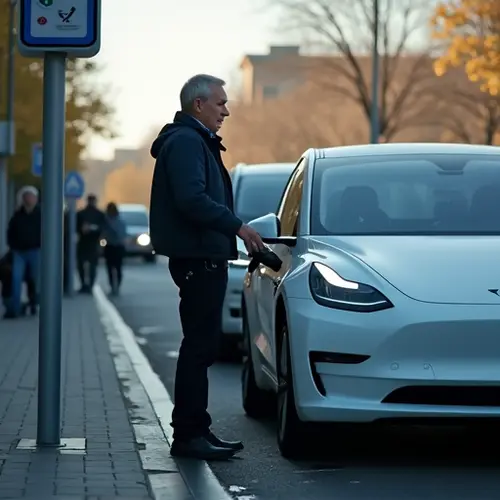
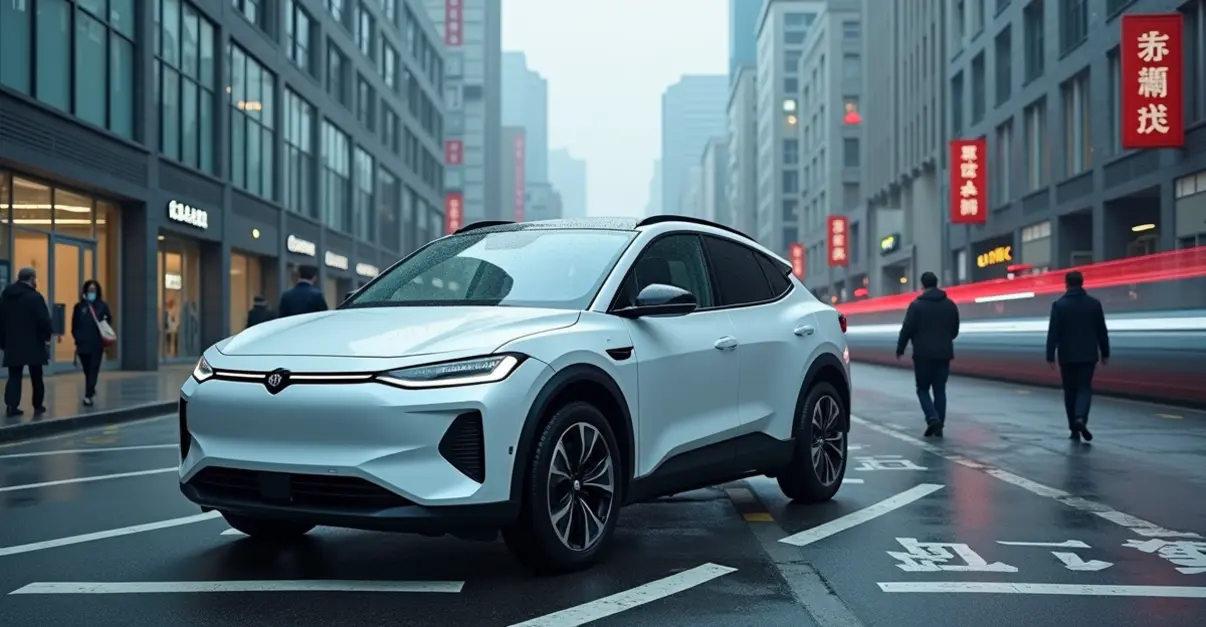
While Europe continues to debate charging infrastructure and grid capacity, China is pioneering the next phase of the energy transition by transforming its massive electric vehicle fleet into a nationwide power storage system. With over 40 million electric vehicles on its roads - representing the world's largest EV market - China is now leveraging these 'batteries on wheels' to stabilize power grids and provide emergency electricity to entire cities.
The Vehicle-to-Grid Revolution
The technology enabling this transformation is called Vehicle-to-Grid (V2G), which allows electric vehicles to not only draw power from the grid but also feed electricity back during peak demand periods. 'This isn't just about transportation anymore - it's about creating a distributed energy network that can respond dynamically to grid needs,' explains Dr. Li Wei, an energy systems researcher at Tsinghua University.
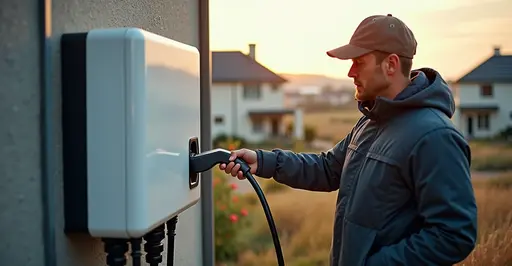
China has launched the world's first nationwide V2G pilot program across nine major cities including Shanghai, Guangzhou, and Shenzhen. The concept is elegantly simple: during the day when solar power is abundant and cheap, millions of EVs charge their batteries. In the evening when energy demand peaks as people return home and cook dinner, these same vehicles discharge electricity back to the grid, effectively turning parked cars into virtual power plants.
Financial Incentives Driving Adoption
For Chinese EV owners, this isn't just environmental altruism - it's a lucrative business opportunity. In the pilot programs, participants can earn up to €170 per charging cycle by strategically timing their electricity sales back to the grid. 'My car actually makes money while I'm at work,' says Shanghai resident Xia Yu, a Nio owner who earns approximately €70 monthly from his vehicle's V2G participation. 'It's like having an investment that pays dividends every time I park.'
The financial model is compelling: owners charge their vehicles overnight when electricity rates are low, then sell that stored energy back during daytime peak hours when prices are high. According to a Carbon Brief analysis, this creates a powerful economic incentive that could accelerate EV adoption while simultaneously solving grid stability challenges.
Ambitious National Targets
China's ambitions extend far beyond pilot programs. The government aims to achieve 1 billion kilowatts of storage capacity by 2030 through V2G technology alone. To put this in perspective, that's equivalent to approximately 100 large nuclear power plants' worth of flexible storage capacity distributed across the country.
The National Development and Reform Commission has launched 30 pilot projects across nine cities, with plans to establish 5,000 operational V2G stations nationwide by 2027. 'We're not just building charging infrastructure - we're building a new energy ecosystem,' states Zhang Yong, director of China's EV Infrastructure Development Bureau.
Technical Innovations and Solutions
Chinese manufacturers have developed innovative solutions to address common V2G challenges. Companies like Nio have introduced battery-swapping stations and Battery-as-a-Service models that eliminate concerns about battery degradation from frequent charging and discharging cycles. 'When your battery wears out, you simply swap it for a fresh one at one of our stations,' explains Nio CEO William Li. 'This removes the biggest psychological barrier for consumers.'
While bidirectional chargers remain expensive - costing nearly three times as much as conventional chargers - China's massive scale and government subsidies are driving costs down rapidly. According to the International Energy Agency's 2025 report, battery prices in China fell nearly 30% in 2024, the largest reduction globally.
Emergency Power and Grid Resilience
Beyond daily grid balancing, China is positioning its EV fleet as a strategic emergency power reserve. A typical 60 kWh EV battery can theoretically power an average household for several days during blackouts or extreme weather events. 'During last summer's heatwave, we used connected EVs to prevent rolling blackouts in three major cities,' reveals grid operator Chen Ming. 'This technology transforms personal transportation into public infrastructure.'
This approach addresses one of renewable energy's biggest challenges: intermittency. By using EVs as distributed storage, China can better integrate its massive wind and solar installations, which now exceed coal power capacity according to recent data.
European Comparison and Global Implications
While China charges ahead with industrial-scale V2G deployment, Europe remains in the pilot phase. Cities like Utrecht in the Netherlands have launched Europe's first large-scale V2G system called 'Utrecht Energized' with 50 Renault vehicles, but regulatory fragmentation and varying grid tariffs across countries present significant barriers.
'The fundamental difference is coordination,' notes European energy analyst Maria Schmidt. 'China has centralized planning and uniform standards, while Europe has 27 different regulatory regimes. This gives China a massive implementation advantage.' According to European Commission reports, harmonized regulations and revised grid fee structures are essential for widespread V2G adoption in Europe.
The Future of Energy Storage
As China continues to expand its V2G infrastructure, the implications extend beyond national borders. The technology demonstrates how transportation and energy systems can converge to create more resilient, efficient grids. With global EV sales projected to reach 34% market share by 2030, V2G represents what many experts believe will become standard functionality in future electric vehicles worldwide.
'What we're witnessing in China today will likely become the global norm tomorrow,' predicts energy futurist Dr. Elena Rodriguez. 'The car is evolving from a means of transportation to a mobile energy asset. This changes everything about how we think about both mobility and electricity.'