
 Deutsch
 English
 Español
 Français
 Nederlands
 Português

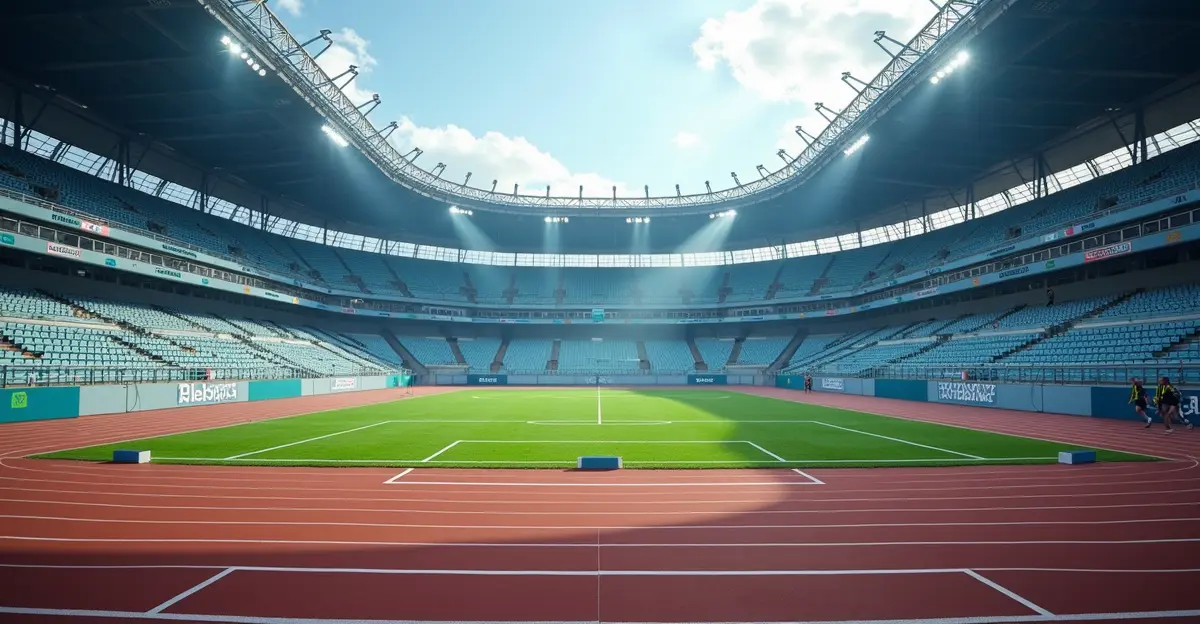





Heat-Adapted Sports Event Revolutionizes Athlete Safety at Major Stadium
In a groundbreaking response to rising global temperatures, a major stadium recently hosted a heat-adapted sports event featuring comprehensive cooling protocols, scheduling changes, and enhanced athlete safety measures. The event represents a significant shift in how sports organizations are addressing climate change impacts on athletic competitions.
Advanced Cooling Technologies Deployed
The stadium implemented state-of-the-art cooling systems including shaded rest areas, cold-water immersion stations, and advanced ventilation technology. According to Clean Cooling research, modern venue designs now incorporate permanent shading structures similar to SoFi Stadium's 2.5-acre canopy. The event featured rapid cooling zones with equipment that must be available when Wet Bulb Globe Temperature (WBGT) reaches 79.7°F or higher, as mandated by updated UIL guidelines for 2025-2026.
Strategic Scheduling Changes
Event organizers moved competition times to cooler parts of the day and implemented mandatory hydration breaks. 'We've completely rethought our scheduling approach,' said event coordinator Maria Rodriguez. 'Morning and evening sessions have replaced midday competitions, and we've built in structured cooling periods every 30 minutes.' This approach aligns with global trends where organizations like FIFA have already moved the 2022 Qatar World Cup to cooler months, and players' unions are calling for similar adjustments for the 2026 World Cup.
Comprehensive Athlete Safety Measures
Athletes underwent pre-event heat acclimation training and had access to personalized hydration plans based on sweat analysis. Medical teams monitored participants using core temperature sensors and implemented the International Olympic Committee consensus guidelines for heat illness prevention. 'The safety protocols were unprecedented,' noted sports physician Dr. James Wilson. 'We had cold-water immersion ready at multiple stations, continuous WBGT monitoring, and emergency response teams positioned throughout the venue.'
Climate Change Driving Innovation
Extreme heat driven by climate change is fundamentally transforming sports events worldwide. According to FIFA 2026 analysis, rising temperatures cause dehydration, heat exhaustion, and life-threatening heatstroke, forcing sports organizations to implement protective measures. Research shows that by century's end, up to 27% fewer cities may be suitable for hosting summer Olympics, prompting event shifts like Qatar's winter World Cup.
Spectator and Official Protection
The event also prioritized spectator safety with shaded seating areas, misting stations, and free water distribution points. Officials received specialized training in heat stress recognition and response. 'We learned from incidents like Wimbledon 2017 where a spectator collapsed,' explained safety director Karen Thompson. 'Our comprehensive approach protects everyone involved - athletes, officials, and fans alike.'
Future Implications for Sports
The successful implementation of these heat adaptation strategies sets a new standard for outdoor sports events. As noted in The Athletic's 2025 analysis, sports organizations are struggling to adapt as heat waves become more severe and prolonged. This event demonstrates that with proper planning and technology, competitions can continue safely even in challenging environmental conditions.
The sports industry faces the dual challenge of adapting to climate change while reducing its 1% contribution to global carbon emissions. However, events like this show that innovation in cooling technology, smart scheduling, and comprehensive safety protocols can create a sustainable future for outdoor sports in an increasingly warm world.





Follow Discussion