


 Deutsch
 English
 Español
 Français
 Nederlands
 Português


 Share
Share




Stephen Colbert's Stand Against Political Pressure on American Media
In a dramatic confrontation that has exposed deep tensions within American broadcast media, late-night host Stephen Colbert has publicly defied pressure from his own employer, CBS, over what he characterizes as political interference from the Trump administration. The controversy, which erupted in February 2026, centers on CBS's decision to cancel Colbert's planned interview with Texas Democratic Senate candidate James Talarico, citing concerns about the Federal Communications Commission's 'equal time' regulations. This incident represents a critical moment in the ongoing struggle between media freedom and political pressure in the United States.
What is the FCC Equal Time Rule?
The Federal Communications Commission's equal time rule, formally known as Section 315 of the Communications Act of 1934, requires broadcast stations to provide equal airtime to all legally qualified political candidates for the same office if they provide coverage to any candidate. Traditionally, news programs and bona fide news interviews have been exempt from this requirement, but under FCC Chairman Brendan Carr's leadership, the interpretation has become stricter. "The FCC is now a political arm of this administration," said Democratic Commissioner Anna Gomez in a recent statement, highlighting concerns about selective enforcement.
The CBS-Talarico Interview Controversy
The conflict began on February 17, 2026, when CBS lawyers contacted Colbert's production team during taping of 'The Late Show' to express concerns about his scheduled interview with Texas State Representative James Talarico. The network cited potential violations of the equal time rule, particularly as early voting had begun in Texas. According to sources familiar with the matter, CBS executives were responding to pressure from FCC regulators who had recently sent inquiry letters to ABC regarding similar appearances on 'The View.'
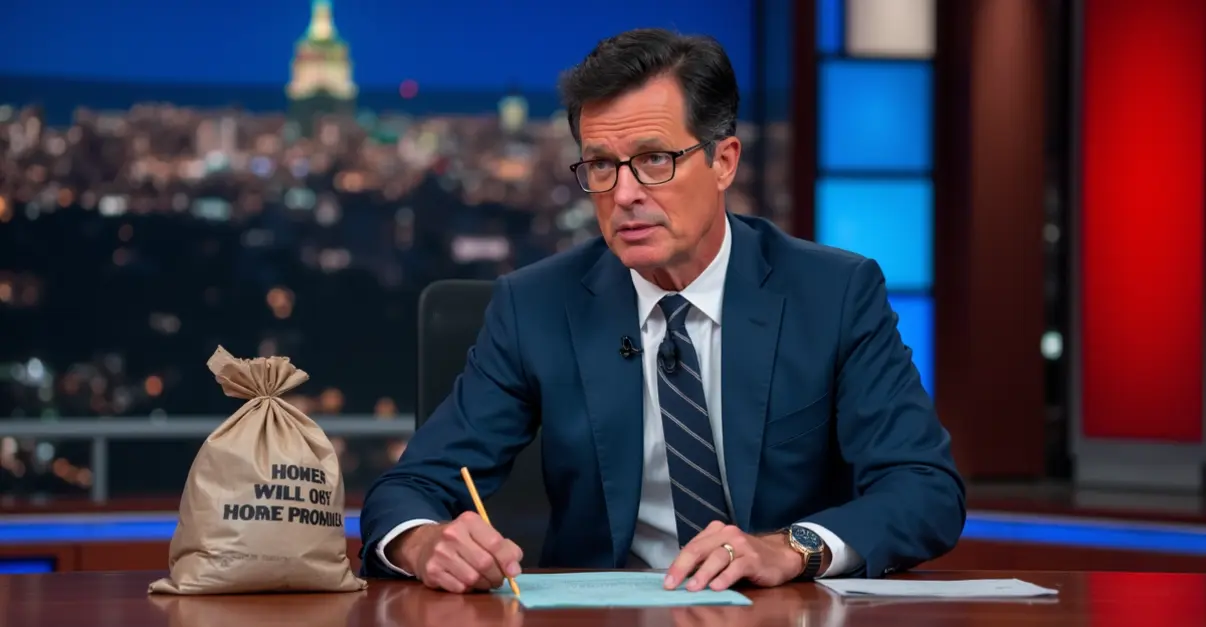
Colbert responded with characteristic defiance, telling his audience: "I'm surprised that a gigantic international company doesn't stand up to bullies." In a symbolic protest, he placed CBS's legal statement in a dog waste bag and threw it away during his broadcast. The host then proceeded to release the interview on YouTube, where it garnered over 5 million views within 48 hours—far exceeding typical television audience numbers for his program.
Broader Context: Media Landscape Under Pressure
This incident occurs against a backdrop of significant changes in American media. CBS parent company Paramount Global recently completed an $8.4 billion merger with Skydance Media, led by producer David Ellison, whose father Larry Ellison is a major Trump donor and ally. Following the merger, CBS News underwent a dramatic editorial shift with the appointment of Bari Weiss as editor-in-chief. Weiss, known for her anti-woke platform The Free Press (which CBS acquired for $150 million), has implemented changes that have created internal tensions.
Several high-profile journalists have departed CBS News in recent months, including Anderson Cooper from '60 Minutes.' While Cooper cited family reasons for his departure, sources indicate concerns about the network's new editorial direction. A report about Trump's policies toward white South African farmers, prepared by Cooper, has reportedly been shelved indefinitely.
Financial and Political Implications
The Colbert controversy coincides with CBS's announcement that 'The Late Show' will end in May 2026. While the network describes this as "purely a financial decision against a challenging backdrop in late night," Colbert has suggested the timing raises questions. The show has been the number one late-night program for nine consecutive seasons, making the cancellation particularly noteworthy.
This situation mirrors earlier conflicts during the Trump administration, including the 2025 suspension of Jimmy Kimmel by ABC after he suggested a conservative influencer's killer might have come from the MAGA movement. Kimmel returned after public outcry, but the incident established a pattern of political pressure on entertainment media.
Key Developments in the Colbert-CBS Conflict
- February 17, 2026: CBS lawyers intervene during 'Late Show' taping regarding Talarico interview
- February 18, 2026: Colbert publicly defies CBS, releases interview on YouTube
- May 2026: 'The Late Show with Stephen Colbert' scheduled to end
- 2025-2026: Paramount-Skydance merger completed, Bari Weiss appointed CBS News editor
- January 2026: FCC issues guidance tightening equal time rule enforcement
Impact on Media Freedom and Public Discourse
The Colbert-CBS confrontation highlights several critical issues facing American media:
- Regulatory Pressure: The FCC's stricter interpretation of equal time rules creates new challenges for political coverage
- Corporate Caution: Media companies appear increasingly risk-averse regarding political content
- Digital Alternatives: YouTube and streaming platforms offer bypass routes for censored content
- Editorial Independence: Journalists face growing tension between corporate policies and professional ethics
The Talarico interview's success on YouTube—generating $2.5 million in campaign donations within 24 hours—demonstrates how digital platforms can circumvent traditional broadcast restrictions. However, this raises questions about the future of broadcast journalism standards and the viability of traditional media business models.
FAQ: Stephen Colbert vs. CBS Media Pressure
What is the FCC equal time rule?
Section 315 of the Communications Act requires broadcast stations to provide equal airtime to all qualified political candidates for the same office if they cover any candidate.
Why did CBS cancel Colbert's interview?
CBS cited legal concerns about FCC equal time regulations, particularly as early voting had begun in Texas for the Senate race.
How did Colbert respond?
He publicly criticized CBS for not standing up to "bullies," symbolically discarded the network's legal statement, and released the interview on YouTube.
When does 'The Late Show' end?
CBS announced the show will conclude in May 2026, though Colbert has suggested the timing raises questions given the current controversy.
What broader trends does this represent?
This reflects increasing political pressure on media, corporate consolidation, and tensions between entertainment programming and journalistic independence.

Follow Discussion