
 Deutsch
 English
 Español
 Français
 Nederlands
 Português







From Battlefields to Boardrooms: Europe's Defining Year Ahead
As 2026 approaches, the European Union stands at a critical crossroads, grappling with simultaneous crises that will test its unity, resilience, and global standing. From the ongoing war in Ukraine to escalating trade conflicts and the artificial intelligence revolution, the bloc faces what analysts describe as its most complex set of challenges since the eurozone crisis.
Ukraine: The Unending Conflict and European Security
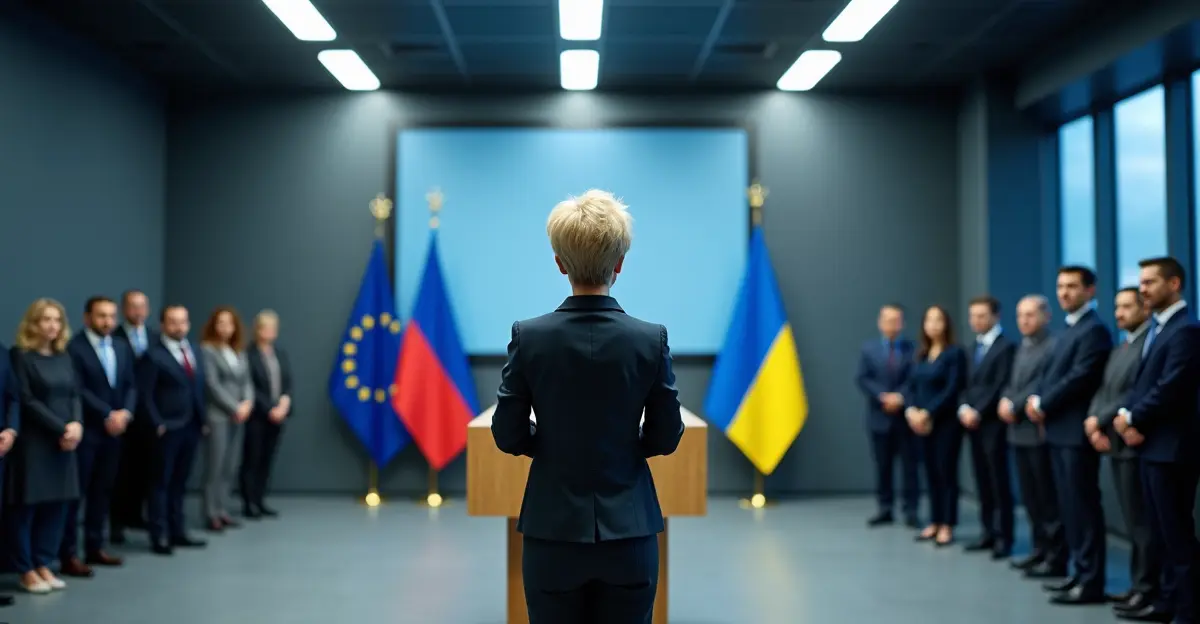
The war in Ukraine enters its fifth year with no clear end in sight. In December 2025, EU leaders agreed to provide Ukraine with 90 billion euros for 2026-2027 to finance its defense against Russian aggression. This massive financial commitment comes as Russian forces continue to make territorial gains in eastern Ukraine.
'Russia was preparing to wage a new year of war on Ukraine in 2026,' warned Ukrainian President Volodymyr Zelenskyy in mid-December, echoing concerns across European capitals. The EU finds itself increasingly sidelined in peace negotiations, with U.S. President Donald Trump taking the lead in coordinating talks between Kyiv and Moscow.
European security faces additional threats beyond the battlefield. 'Russia could step up sabotage, cyberattacks and disinformation campaigns next year,' warned Germany's domestic spy chief in early December, particularly concerning as Germany prepares for five regional elections in 2026. The far-right, Moscow-friendly Alternative for Germany (AfD) party hopes to gain more support in these elections, potentially complicating Germany's strong backing of Ukraine.
Trade Wars on Multiple Fronts
The EU's economic landscape for 2026 appears increasingly turbulent. The European Commission forecasts the eurozone economy will grow by just 1.2 percent in 2026, down from previous estimates, as trade tensions with major partners intensify.
Relations with the United States remain strained under the Trump administration, which has imposed 15 percent tariffs on most EU exports including cars, semiconductors, and pharmaceuticals. 'The EU's trade policy reflects a shift from market-access mechanisms to economic statecraft in a volatile geopolitical environment,' notes a recent international trade analysis.
Meanwhile, trade tensions with China have escalated dramatically. In December 2025, Beijing slapped provisional import tariffs of 21.9 to 42.7 percent on European dairy products, accusing the EU of significantly subsidizing its dairy industry. This tit-for-tat escalation follows Brussels' investigation into Chinese electric vehicles for excessive state subsidies.
The EU also faces internal challenges on trade. The long-delayed EU-Mercosur trade deal with Brazil, Argentina, Uruguay, and Paraguay has been postponed to January 2026 after farmers staged protests outside an EU leaders' summit in Brussels. This agreement would create the world's biggest free-trade area but faces firm opposition from France and other member states.
The AI Revolution and Regulatory Balancing Act
Perhaps the most transformative challenge comes from artificial intelligence. The EU's pioneering AI Act enters its critical implementation phase in 2026, with the European Commission proposing a 'Digital Omnibus on AI' to streamline compliance ahead of the law's full application on August 2, 2026.
'Money is pouring into AI, with spending expected to reach more than 2 trillion dollars worldwide in 2026,' according to consulting firm Gartner. Yet the EU faces a delicate balancing act: fostering innovation while ensuring safety and fundamental rights protection.
The proposed Digital Omnibus introduces extended compliance timelines for high-risk AI systems, with deadlines potentially delayed to December 2027 for certain systems. It also provides relief for SMEs through simplified documentation requirements and caps on penalties. 'The AI Act aims to balance innovation with safety, fundamental rights protection, and human-centric AI development across Europe,' states the EU's digital strategy website.
However, dozens of Europe's biggest companies, including Airbus and Mercedes-Benz, have called for a pause on aspects they say risk stifling innovation. The clash with big tech giants continues as Brussels rethinks its digital rulebooks amid pressure from the U.S. administration and businesses.
Economic and Political Transitions
Amid these challenges, the EU undergoes significant internal changes. Bulgaria will join the eurozone on January 1, 2026, despite domestic opposition and political instability following the government's resignation in mid-December 2025. The self-proclaimed 'only patriotic party in Bulgaria' Vazrazhdane has organized protests against adopting the euro, arguing it would undermine national sovereignty.
The EU also seeks to tackle the flood of small parcels from China ordered via platforms like Shein and Temu. Last year, 4.6 billion small retail packages entered the European Union - more than 145 per second - with 91 percent originating in China. EU finance ministers have agreed to impose a three-euro duty on low-value imports starting July 2026.
As European Council President António Costa noted regarding Ukraine funding, the EU faces difficult choices between competing priorities: 'Without new funding, Ukraine was at risk of running a deficit of 45 to 50 billion euros next year and of having to scale back its military production.'
The coming year will test whether the EU can maintain its role as a global regulatory standard-setter while navigating unprecedented geopolitical and technological challenges. With war on its doorstep, trade wars on multiple fronts, and a technological revolution reshaping economies, 2026 represents a defining moment for the European project.




Follow Discussion