Nederlands
 English
 Deutsch
 Français
 Español
 Português
A crane collapse on a Thai passenger train killed 22 and injured over 80. The accident occurred during construction of a China-backed high-speed rail project, raising serious safety concerns.
Deadly Construction Accident Derails Passenger Train in Thailand
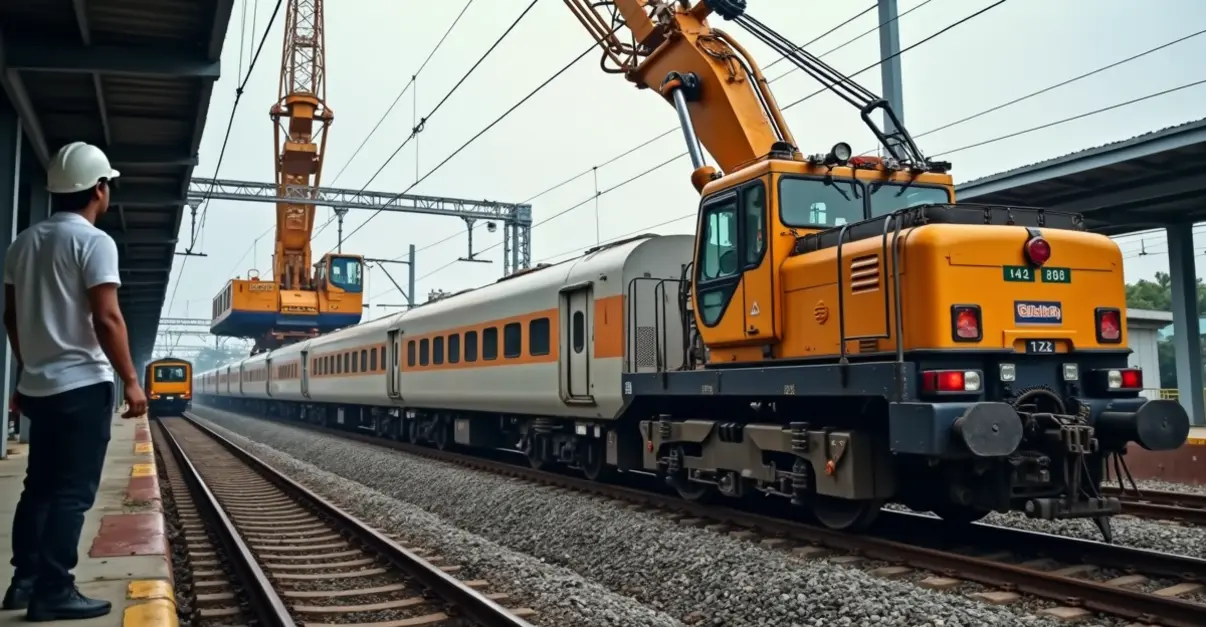
A catastrophic construction accident in northeast Thailand has left at least 22 people dead and over 80 injured after a crane collapsed onto a moving passenger train on Wednesday morning. The disaster occurred in Sikhio district, Nakhon Ratchasima province, approximately 230 kilometers northeast of Bangkok, at around 9:15 a.m. local time.
High-Speed Rail Project Turns Deadly
The crane was part of a massive $5.4-billion high-speed rail project, a joint Thai-Chinese venture that's part of China's Belt and Road Initiative. The project aims to connect Bangkok to Kunming, China via Laos by 2028. According to Transport Minister Phiphat Ratchakitprakarn, 'The crane was being used to construct elevated concrete columns for the new high-speed line when it collapsed onto the passing train below.'
The train, traveling from Bangkok to Ubon Ratchathani province with 195 passengers on board, was struck by the falling crane which sliced through the middle of one carriage. The impact caused the train to derail, overturn, and briefly catch fire. Rescue teams worked for hours using heavy equipment to extract trapped passengers from the wreckage.
Rescue Operations and Investigation
Emergency services rushed to the scene where live footage showed the brightly colored train lying on its side with smoke billowing from the debris. Local hospitals were placed on high alert as ambulances transported the injured. 'This is one of the worst rail accidents we've seen in recent years,' said a senior rescue official who requested anonymity. 'The combination of construction equipment failure and a moving train created a perfect storm of disaster.'
Transport authorities have ordered a full investigation into the incident. Preliminary reports suggest the crane may have been improperly secured or experienced mechanical failure. The accident has raised serious questions about safety protocols at construction sites near active railway lines.
Historical Context and Safety Concerns
This tragedy follows a pattern of industrial accidents in Thailand's construction sector. In 2024, a tunnel collapse in the same province killed three workers. Thailand has been working to improve construction safety standards through updates to the Occupational Safety, Health, and Environmental Act, but enforcement remains inconsistent.
The high-speed rail project represents one of Thailand's largest infrastructure investments. The incident has prompted calls for stricter oversight of foreign-backed construction projects. 'We cannot sacrifice safety for speed in development,' commented a local safety advocate. 'Every life lost is a failure of our systems.'
As families mourn their loved ones and survivors recover from their injuries, the Thai government faces mounting pressure to ensure such tragedies don't recur. The investigation continues, with findings expected to influence safety regulations for infrastructure projects across Southeast Asia.