


 Deutsch
 English
 Español
 Français
 Nederlands
 Português


 Share
Share




What is the Lac La Belle Shipwreck Discovery?
In a remarkable maritime archaeology breakthrough, shipwreck hunter Paul Ehorn has discovered the long-lost luxury steamer Lac La Belle, which sank in Lake Michigan nearly 150 years ago. The 217-foot wooden vessel, missing since October 13, 1872, was found approximately 20 miles offshore between Racine and Kenosha, Wisconsin, marking one of the most significant Great Lakes shipwreck discoveries of 2026. This find represents the culmination of nearly 60 years of searching by the 80-year-old veteran wreck hunter and adds to the estimated 6,000-10,000 undiscovered shipwrecks in the Great Lakes region.
Historical Background: The Lac La Belle's Tragic Journey
The Lac La Belle was built in 1864 in Cleveland, Ohio, during the post-Civil War shipping boom that transformed Great Lakes commerce. The 66-meter luxury passenger steamer operated between Cleveland and Lake Superior, serving as a vital transportation link for both passengers and cargo. The vessel's history was marked by previous misfortune when it sank in 1866 after a collision, only to be raised and returned to service in 1869. This resilience made its final disappearance in 1872 particularly poignant for maritime historians.
On that fateful October night, the Lac La Belle departed Milwaukee bound for Grand Haven, Michigan, carrying 53 passengers and crew along with valuable cargo including barley, flour, pork, and whiskey. Approximately two hours into the journey, the ship began taking on water uncontrollably during a severe gale. Captain William H. Brown attempted to return to Milwaukee, but massive waves extinguished the boilers, leaving the vessel powerless. Around 5:00 AM, the captain ordered evacuation, and the ship sank stern-first into Lake Michigan's depths. While most passengers escaped in lifeboats, eight people perished when one boat capsized during the rescue attempt.
The Discovery: 60 Years of Searching Pays Off
Paul Ehorn's quest for the Lac La Belle began in 1965 when he was just 25 years old, inspired by historical accounts of the vessel's disappearance. The breakthrough came in October 2022 when fellow wreck hunter Ross Richardson provided a crucial clue: a fisherman had reported finding a distinctive 19th-century steamship component in a specific area of Lake Michigan. This information allowed Ehorn and his team to narrow their search zone significantly.
'It's a kind of game, like solving a puzzle,' Ehorn told reporters about his methodology. 'The easier ones we've already found, so each new discovery becomes more challenging.'
Using advanced side-scan sonar technology, the team located the wreck in approximately 300 feet of water. The discovery was kept confidential until divers could create a comprehensive 3D photogrammetry model of the site, a process delayed by poor weather conditions until summer 2025. The Lac La Belle represents Ehorn's 15th shipwreck discovery, cementing his reputation as one of America's most persistent maritime archaeologists.
Current Condition of the Wreck
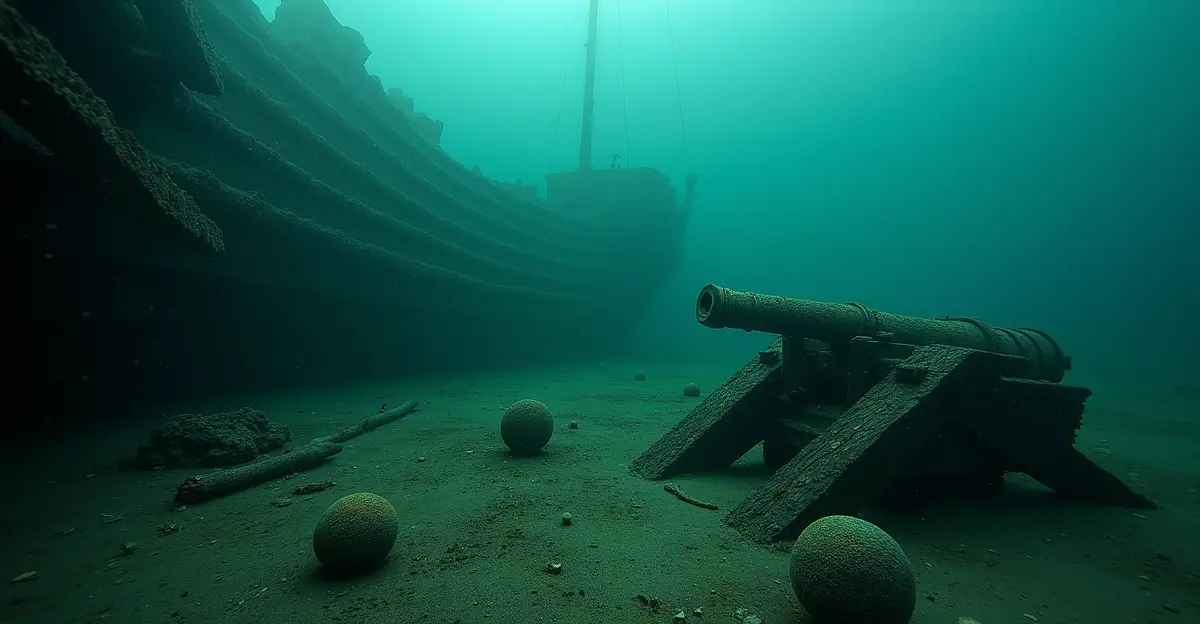
Despite 150 years underwater, the Lac La Belle remains remarkably intact due to Lake Michigan's cold freshwater preservation conditions. Key observations from the discovery include:
- The hull is structurally sound with visible oak framing
- The exterior is covered with invasive quagga mussels, a common issue in Great Lakes shipwrecks
- The upper cabins have deteriorated, but the main structure remains
- One of the ship's propellers is missing, consistent with historical accounts
- The oak interior shows surprisingly good preservation
- Cargo remnants may still be present within the hull
This preservation quality makes the Lac La Belle an invaluable time capsule of 19th-century shipbuilding and Great Lakes commerce, similar to other significant discoveries like the Titanic wreck exploration that have revolutionized maritime archaeology.
Technological Advances in Shipwreck Hunting
The Lac La Belle discovery highlights how modern technology has transformed shipwreck hunting. Key tools and techniques used in this find include:
| Technology | Application | Impact |
|---|---|---|
| Side-scan sonar | High-resolution seabed imaging | Identified wreck structure from surface |
| 3D photogrammetry | Underwater digital modeling | Created detailed virtual reconstruction |
| Historical weather data analysis | Reconstructed storm patterns | Narrowed search area based on 1872 conditions |
| AI-assisted detection | Automated wreck identification | Enhanced analysis of sonar imagery |
These technologies represent a quantum leap from traditional methods, allowing researchers to locate and document wrecks with unprecedented accuracy. The integration of artificial intelligence, particularly in systems like DFSE-YOLO which achieves 78.2% accuracy in shipwreck detection, has revolutionized how underwater archaeology expeditions approach their work.
Impact and Implications for Maritime History
The Lac La Belle discovery has significant implications for our understanding of 19th-century Great Lakes commerce and shipbuilding. As one of the region's most sought-after missing ships, its location provides:
- New insights into wooden steamship construction techniques
- Evidence of cargo transportation patterns during industrialization
- Documentation of passenger vessel safety standards of the era
- Preservation data for future conservation efforts
Ehorn plans to present detailed findings and the 3D model at the Ghost Ships Festival in Wisconsin in March 2026, where maritime historians and enthusiasts will examine this breakthrough discovery. The event will showcase how modern technology continues to unlock historical mysteries, much like recent revelations from the HMS Ontario discovery that reshaped our understanding of 18th-century naval warfare.
With thousands of Great Lakes shipwrecks still undiscovered, each new find adds to our collective maritime heritage. The Lac La Belle serves as a reminder of the human stories behind these wrecks and the ongoing importance of preserving underwater cultural heritage before invasive species and environmental changes cause irreversible damage.
Frequently Asked Questions
How was the Lac La Belle shipwreck found?
The wreck was located using side-scan sonar after nearly 60 years of searching by Paul Ehorn. A crucial clue from fellow researcher Ross Richardson about a fisherman's discovery of 19th-century steamship components helped narrow the search area in October 2022.
Why did it take so long to announce the discovery?
The discovery was kept confidential until divers could create a comprehensive 3D photogrammetry model of the wreck. Poor weather conditions delayed this documentation process until summer 2025, with formal announcement occurring in February 2026.
How many people died when the Lac La Belle sank?
Eight people perished when one of the lifeboats capsized during the evacuation. The ship was carrying 53 passengers and crew total, with 45 surviving the October 13, 1872 sinking.
What condition is the wreck in after 150 years?
Remarkably intact due to Lake Michigan's cold freshwater preservation. The hull remains structurally sound with visible oak framing, though covered with invasive quagga mussels. The upper cabins have deteriorated but the main structure is preserved.
Will the wreck's location be made public?
Paul Ehorn plans to keep the exact coordinates confidential to prevent unauthorized diving and potential damage to the historical site. The 3D model and documentation will be shared with researchers and presented at the 2026 Ghost Ships Festival.




Follow Discussion