
 Deutsch
 English
 Español
 Français
 Nederlands
 Português

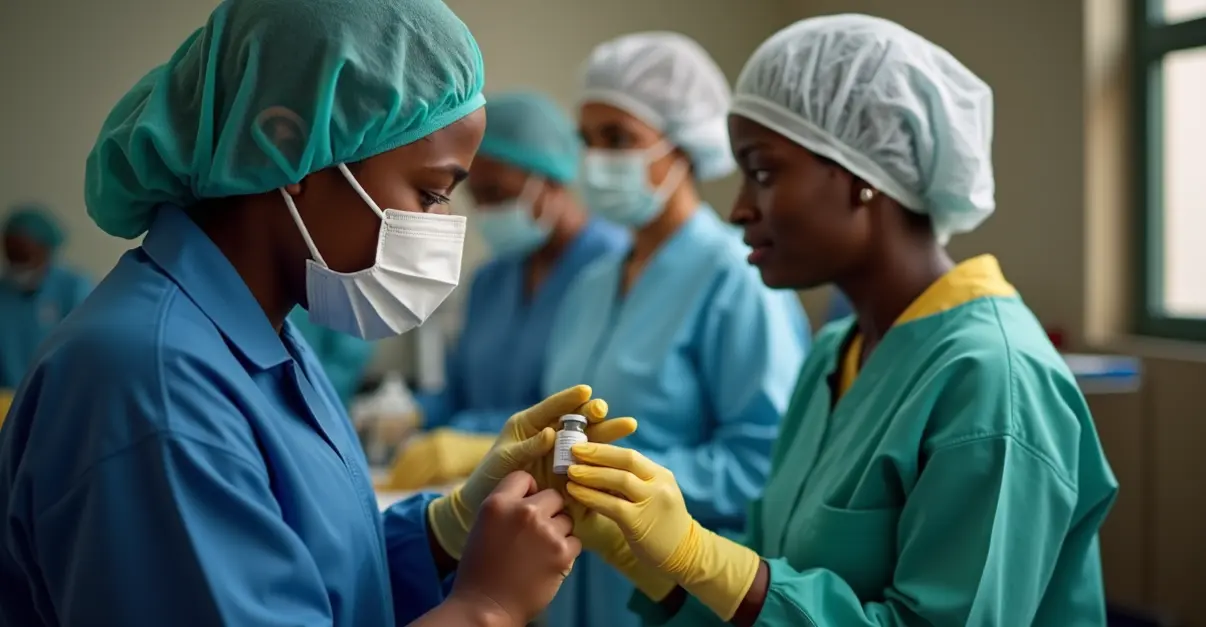





International Vaccine Technology Transfer Agreements Reach Critical Milestone
In a major step toward global health equity, international vaccine technology transfer agreements have been finalized, paving the way for expanded regional manufacturing capacity, workforce training programs, and more predictable supply timelines. The agreements, spearheaded by the World Health Organization (WHO) and Medicines Patent Pool (MPP), represent a strategic response to the vaccine inequities exposed during the COVID-19 pandemic.
Building Regional Manufacturing Hubs
The centerpiece of these agreements is the WHO's mRNA Technology Transfer (mRNA TT) Programme, which has successfully transferred foundational mRNA vaccine technology to 15 partner organizations across six WHO regions. The program's hub in Cape Town, South Africa, at Afrigen Biologics, has been instrumental in developing and sharing mRNA vaccine production capabilities.
'This represents a crucial step toward enabling African countries to produce their own vaccines and treatments for pandemics and routine public health needs,' said Dr. Tedros Adhanom Ghebreyesus, WHO Director-General, in a recent statement. 'For too long, low- and middle-income countries have been at the mercy of global supply chains that prioritize wealthy nations.'
The technology transfer process involves moving scientific knowledge, manufacturing methods, and quality control systems from established vaccine producers to new regional facilities. According to the WHO's mRNA TT Programme page, the initiative aims to build sustainable regional production of mRNA-based health products to prepare for future pandemics and ensure health security between emergencies.
Workforce Training Initiatives
Parallel to the technology transfers, comprehensive workforce training programs are being implemented. The Global Training Hub for Biomanufacturing (GTH-B) in the Republic of Korea is offering a 2025 hands-on training program for mRNA vaccine manufacturing. This 7-week program includes a 3-week online pre-training module followed by practical training at Korean National Institute for Bioprocessing Research and Training facilities.
'We're targeting 20 participants from Low- and Middle-Income Countries who work in biomanufacturing roles with up to 6 years of experience,' explained a GTH-B spokesperson. 'The goal is to build biomanufacturing capacity in LMICs to address vaccine access inequities.'
The training covers everything from basic molecular biology to advanced manufacturing processes, with applications due by August 15, 2025. Similar programs are being developed in Africa, Asia, and Latin America to create a global network of trained vaccine manufacturing professionals.
Supply Chain and Timelines
The agreements establish clear supply timelines and production capacity targets. According to the platform transfer initiative report, Africa's manufacturing capacity is receiving significant investment, with the African Manufacturing Accelerator (AVMA) receiving $1.2 billion. BioNTech is establishing modular mRNA facilities in Rwanda, while Egypt is planning Africa's first end-to-end mRNA platform.
However, challenges remain. A 2023 assessment by Africa CDC, CHAI, and PATH reveals that Africa currently produces only 1% of vaccines used locally, with 99% imported. The Partnerships for African Vaccine Manufacturing (PAVM) aims to enable Africa to manufacture 60% of its routine immunization needs by 2040.
'The imbalance is stark: Africa has excess capacity for form/fill/finish operations but critically lacks antigen production capacity,' noted a report from the Clinton Health Access Initiative. 'Planned expansions would more than double form/fill/finish capacity by 2030, creating sustainability risks.'
Global Impact and Future Outlook
The technology transfer agreements extend beyond Africa. In Asia, Indonesia and Bangladesh are expanding manufacturing capacity with support from CEPI and the Asian Development Bank. Latin America benefits from PAHO-CEPI collaborations, while Brazil's Bio-Manguinhos facility is undergoing significant upgrades. Australia hosts Moderna's commercial-scale mRNA plant, creating a diversified global manufacturing network.
These agreements represent more than just vaccine production—they're about building health security infrastructure. As defined by Wikipedia's technology transfer entry, technology transfer involves moving technology from organizations that own it to others who can transform inventions into products that benefit society.
The Medicines Patent Pool has been instrumental in these efforts, with key agreements including a €39 million grant to Afrigen (2021-2026) to establish a global mRNA technology development center and a $19 million grant to Biovac (2022-2026) for manufacturing technology transfer.
Looking ahead, the success of these agreements will depend on sustained funding, regulatory harmonization, and market commitment. But for the first time, there's a clear roadmap for building vaccine manufacturing capacity where it's needed most, potentially transforming global health security for generations to come.





Follow Discussion