
 Deutsch
 English
 Español
 Français
 Nederlands
 Português

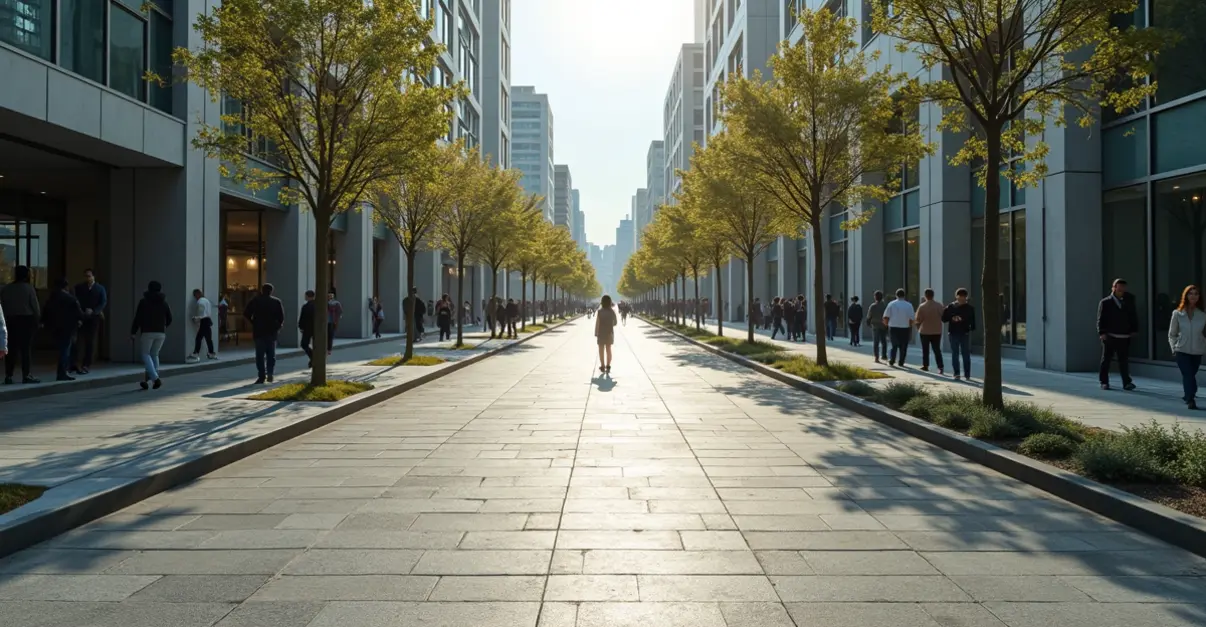





Cool Pavement Pilot Shows Temperature Reductions
As cities worldwide grapple with intensifying urban heat islands, a groundbreaking cool pavement pilot program has demonstrated remarkable temperature reductions while raising important questions about material costs, maintenance requirements, and scaling potential. The innovative approach, which uses specialized reflective coatings and materials, has shown surface temperature reductions of up to 20°C in some applications, offering hope for more livable urban environments.
The Science Behind Cool Pavements
Cool pavements work by reflecting more solar radiation and absorbing less heat than conventional asphalt or concrete surfaces. According to EPA research, conventional asphalt can reach surface temperatures up to 152°F (67°C) at midday, while cool pavements remain 10-16°F (5.5-9°C) cooler. The technology includes various approaches: reflective coatings applied to existing pavement, specially formulated concrete mixes, permeable pavements that allow evaporative cooling, and even innovative systems using naturally cooled subsurface water.
Dr. Elena Rodriguez, an urban climatologist at Arizona State University who has studied the Phoenix Cool Pavement Program, explains: 'What we're seeing is not just surface-level cooling. The thermal benefits extend to the surrounding air, potentially reducing nighttime temperatures and creating more comfortable microclimates in urban areas.'
Material Costs and Economic Considerations
The financial aspect of cool pavement implementation presents both challenges and opportunities. Initial material costs for cool pavement treatments typically range from 15-30% higher than conventional asphalt, depending on the specific technology and regional factors. However, researchers point to potential long-term savings through reduced maintenance needs and extended pavement lifespan.
A comprehensive review published in Environmental Science and Pollution Research highlights innovative approaches using waste materials like glass powder, fly ash, zeolite, polymers, and recycled aggregates. These materials not only reduce surface temperatures but also offer environmental benefits by repurposing industrial byproducts.
John Matthews, a civil engineer specializing in sustainable infrastructure, notes: 'The cost equation is changing rapidly. As production scales up and more cities adopt these technologies, we're seeing prices drop significantly. Within five years, I expect cool pavement options to be cost-competitive with traditional materials.'
Maintenance Requirements and Durability
Maintenance considerations represent a critical factor in the widespread adoption of cool pavement technologies. Early pilot programs revealed that some reflective coatings required more frequent reapplication than initially anticipated, particularly in high-traffic areas. However, newer formulations have shown improved durability, with some lasting 5-7 years before requiring maintenance.
The City of Phoenix's Cool Pavement Program, which has expanded to over 140 miles of treated pavement since its 2020 pilot, provides valuable real-world data. According to city officials, the water-based asphalt treatment has demonstrated good durability while maintaining its reflective properties. Regular cleaning to remove dirt and debris has proven essential for maintaining optimal reflectivity.
Permeable cool pavements present different maintenance challenges, requiring specialized vacuum equipment to prevent clogging of pores. However, these systems offer additional benefits for stormwater management, potentially offsetting maintenance costs through reduced drainage infrastructure requirements.
Scaling Potential and Urban Implementation
The scaling potential of cool pavement technologies represents both the greatest opportunity and most significant challenge. Successful implementation requires coordinated efforts across municipal departments, careful planning for different urban contexts, and consideration of local climate conditions.
A study in Energy and Buildings demonstrated a nature-based cool pavement system achieving surface temperature reductions of up to 20°C in Seville, Spain. The passive cooling strategy maintained safe thermal conditions for over 80% of exposure time, showing particular promise for pedestrian areas, parks, and public spaces.
Urban planner Maria Chen explains the scaling considerations: 'We can't just apply the same solution everywhere. Cool pavement strategies need to be tailored to specific urban contexts - considering traffic patterns, surrounding buildings, local climate, and community needs. The most successful implementations integrate cool pavements with other heat mitigation strategies like increased greenery and shade structures.'
Future Outlook and Policy Implications
As climate change intensifies urban heat islands, cool pavement technologies are gaining traction in municipal planning worldwide. The Transportation Research Board has formed a subcommittee specifically to address the growing demand for guidance on pavement choices, indicating increasing institutional recognition of these technologies.
Key policy considerations include developing standards and labeling programs for cool pavement materials, creating incentives for adoption through green building codes, and integrating cool pavement requirements into municipal infrastructure planning. Some cities are already leading the way - Los Angeles has implemented cool pavement programs in several neighborhoods, while Singapore has incorporated cool pavement requirements into its Green Mark building certification system.
Environmental scientist Dr. Robert Kim summarizes the broader implications: 'Cool pavements represent more than just a technical solution to urban heat. They're part of a fundamental rethinking of how we design our cities for climate resilience. When combined with green infrastructure, improved building materials, and thoughtful urban planning, they can help create cities that are not just cooler, but healthier and more sustainable for all residents.'
The continued evolution of cool pavement technologies, combined with growing urban heat challenges, suggests these innovative materials will play an increasingly important role in creating climate-resilient cities. As research advances and implementation experience grows, the balance between costs, benefits, and scalability continues to improve, offering promising pathways toward more livable urban environments.



Follow Discussion