
 Deutsch
 English
 Español
 Français
 Nederlands
 Português

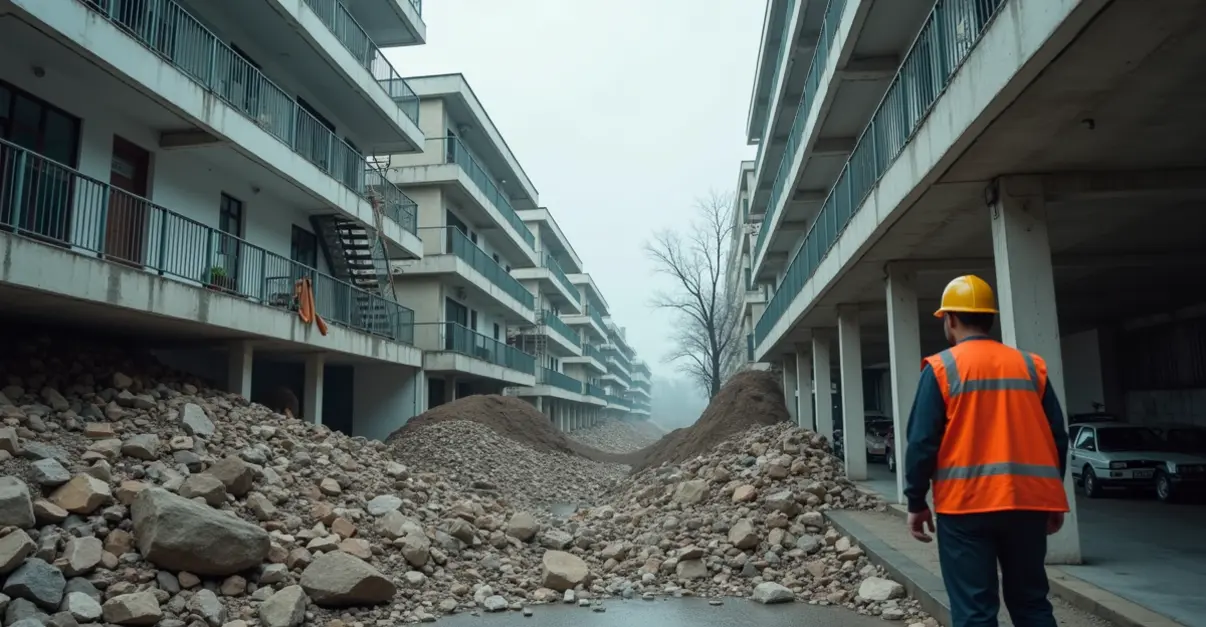





Earthquake Resilience Takes Center Stage in 2025
As seismic threats loom larger than ever, nations worldwide are implementing unprecedented measures to strengthen critical infrastructure against devastating earthquakes. From Japan's record-breaking ¥20 trillion resilience plan to Turkey's comprehensive building code reforms, countries are learning from past disasters to build safer futures.
Japan's Massive Infrastructure Investment
Japan, still haunted by the memory of the 1995 Kobe earthquake that killed over 5,000 people, is taking earthquake preparedness to new heights. The government has announced a record-breaking ¥20 trillion ($134 billion) five-year national resilience plan starting in fiscal 2026. This represents a significant increase from the previous ¥15 trillion allocation and focuses on making water and sewage systems earthquake-resistant.
'We cannot afford to wait for the next big one,' says disaster preparedness expert Dr. Kenji Tanaka. 'The Noto Peninsula Earthquake of 2024 showed us that even our advanced systems have vulnerabilities that need immediate attention.'
The plan includes repairing roads and bridges at approximately 92,000 locations nationwide and aims to make 34% of water and sewer pipes earthquake-resistant by 2030, up from just 15% in 2023.
United States: Bipartisan Legislation for National Resilience
Across the Pacific, the United States is addressing its own seismic vulnerabilities through legislative action. Representatives Kevin Mullin (CA-15) and Vince Fong (CA-20) introduced the bipartisan Earthquake Resilience Act (H.R.2568) during Earthquake Preparedness Month. The legislation addresses the urgent need for national earthquake preparedness, as nearly 75% of the U.S. could experience damaging earthquakes in the next century.
'As lifelong Californians, we've experienced firsthand what earthquakes can do to communities,' said Representative Mullin. 'This bill ensures we're taking coordinated federal action to protect Americans nationwide.'
The bill would direct federal agencies to conduct America's first national risk assessment of earthquake resiliency and require standards for critical 'lifeline' infrastructure including power, water, communications, and transportation systems.
Turkey's Building Code Revolution
Following the devastating 2023 Kahramanmaraş earthquakes that displaced 3 million people and damaged 320,000 buildings, Turkey has implemented sweeping construction reforms. Experts note that 97% of collapsed buildings in Kahramanmaraş were constructed before 1997 seismic code updates, highlighting the critical importance of modern building standards.
Istanbul Technical University is leading a major national project to develop Turkey's first comprehensive Seismic Retrofit Code. 'We're creating cost-effective retrofit solutions for existing buildings that don't meet modern standards,' explains project coordinator Prof. Dr. Alper Ilki. 'This isn't just about new construction - it's about making our existing urban landscape safer.'
The project involves 20 expert researchers from 11 universities and will establish design principles for various building types including reinforced concrete, steel, and timber structures.
Chile's Advanced Seismic Standards
Chile, another nation with extensive seismic experience, has updated its NCh2369:2025 standard for seismic engineering of industrial structures. This mandatory standard governs seismic design for industrial facilities not fully covered by existing codes, addressing specialized needs of sectors like mining, energy, and manufacturing.
'Operational continuity is our primary design goal,' says seismic engineer Maria Fernandez. 'When an earthquake hits, we need critical facilities to keep functioning - hospitals, power plants, communication centers. That's what saves lives.'
Global Lessons and Future Challenges
The National Institute of Standards and Technology (NIST) in the U.S. estimates annual earthquake losses at $6.1 billion affecting nearly 50% of Americans. Their Earthquake Risk Reduction Program focuses on functional recovery of buildings and lifelines to improve recovery time after earthquakes.
Washington State, which has the second highest earthquake risk in the U.S., has implemented practical measures including updating public preparedness messaging from 72-hour to two-week supply recommendations. Some counties now advise 30-day self-sufficiency.
As climate change potentially influences seismic activity and urban populations continue to grow in earthquake-prone areas, the global focus on infrastructure resilience has never been more critical. The challenge remains balancing immediate costs with long-term safety, but as recent disasters have shown, the price of inaction is far greater.



Follow Discussion